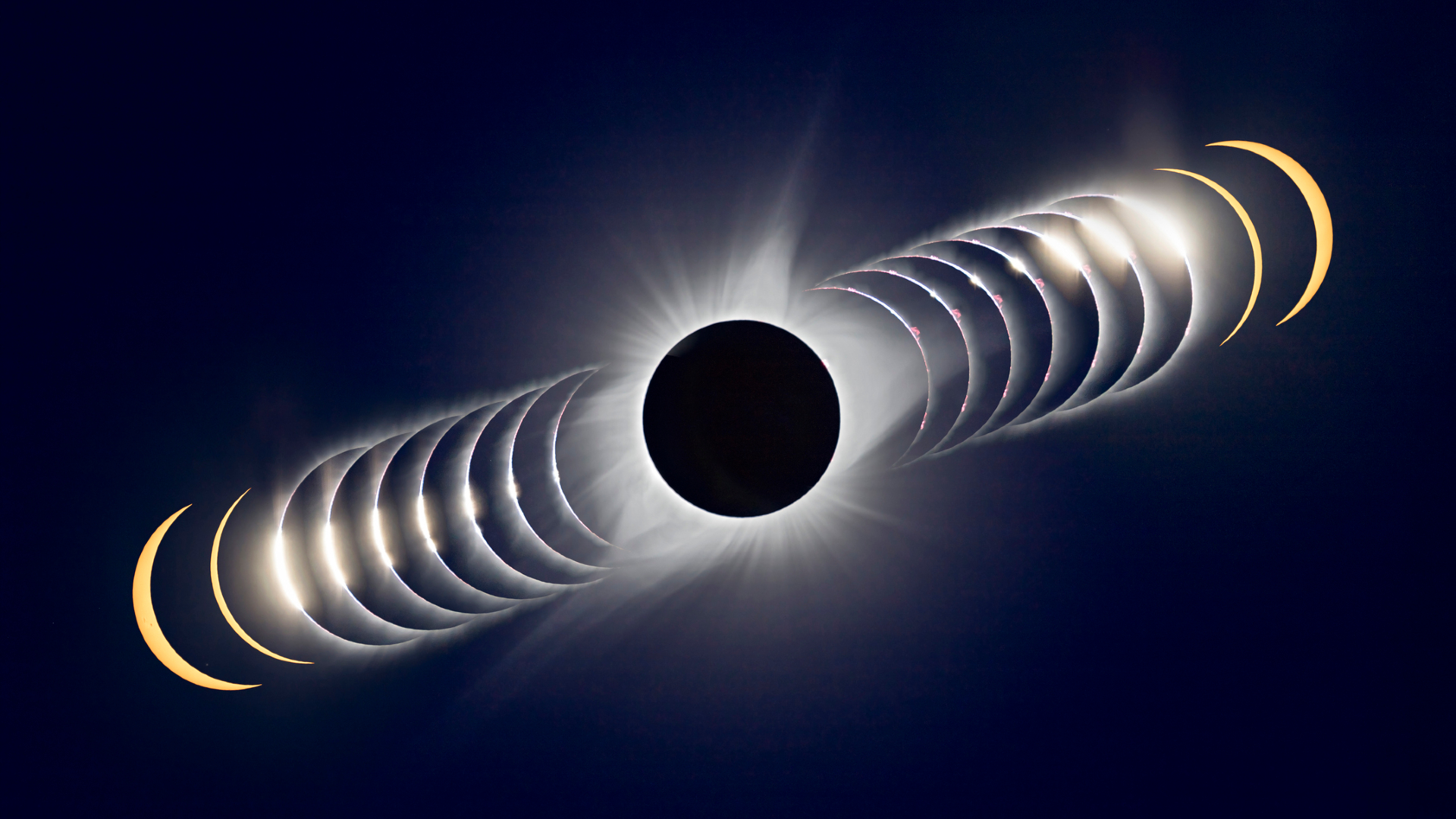
Mark your calendars for August 12, 2026, because the Moon is about to swallow the Sun. A total solar eclipse will sweep across the Arctic, Greenland, Iceland, and Spain, offering millions of people a rare chance to witness day turn into night. But if you are reading this from India, you will need to watch it online.
The eclipse will be the first total solar eclipse visible from mainland Europe since 1999, and NASA has confirmed it will last up to 2 minutes and 18 seconds at its maximum point over the North Atlantic Ocean.
What You Need to Know
- The total solar eclipse occurs on Wednesday, August 12, 2026
- It will NOT be visible from India since it happens during Indian nighttime (approximately 9:45 PM to 2:15 AM IST)
- The path of totality crosses Siberia, Greenland, Iceland, northern Spain, and a small part of Portugal
- Partial eclipse will be visible across most of Europe, parts of North America, and northwestern Africa
- NASA and other organizations will stream the event live for viewers worldwide
- India's next total solar eclipse will occur on March 20, 2034 -- nearly eight years from now
Where the Total Eclipse Will Be Visible
The path of totality is the narrow corridor where the Moon completely blocks the Sun. On August 12, that path begins in northern Siberia, sweeps across the Arctic Ocean near the North Pole, makes landfall in northeastern Greenland just after 4:00 PM local time, crosses western Iceland, and then travels across the North Atlantic before reaching northern Spain and a tiny corner of Portugal.
For those located within this path, the sky will darken dramatically, stars may become visible, and the Sun's corona -- its outermost atmosphere -- will glow brilliantly around the Moon's silhouette.
Outside the path of totality but within the broader penumbral shadow, a partial solar eclipse will be visible. This includes most of Europe, the United Kingdom, Canada, Alaska, and parts of northwestern Africa. In these regions, the Moon will take a bite out of the Sun but never cover it completely.
Why India Misses This Eclipse
The timing is the problem. The entire eclipse sequence occurs during the night in the Indian Standard Time zone. By the time the Moon begins crossing the Sun over the Arctic, the Sun has already set in India. The partial phases begin around 9:45 PM IST and the event ends around 2:15 AM IST on August 13 -- well after dark.
Since the eclipse is not visible from India, there are no Sutak Kaal restrictions either. Temples remain open, daily rituals continue as normal, and no religious observances are tied to this event for viewers in India.
For skywatchers in India, the next total solar eclipse visible from the subcontinent will take place on March 20, 2034. That eclipse will sweep across southern India, making it a much more accessible event for local observers.
How to Watch the Eclipse Safely
If you are planning to be in the path of totality, you must take eye safety seriously. Looking directly at the Sun without proper protection can cause permanent eye damage. Here are the essential safety tips:
Use certified solar eclipse glasses that meet the ISO 12312-2 international safety standard. Regular sunglasses, even very dark ones, are not safe for looking at the Sun. If you are using binoculars, telescopes, or cameras, attach solar filters to the front of the optics before pointing them at the Sun.
During the brief moment of totality -- when the Moon fully covers the Sun -- it is safe to look without glasses. But the moment the Sun begins to reappear, you must put your eye protection back on.
For those watching from home, NASA's official live stream, timeanddate.com, and several天文 observatories will broadcast the event in real time. This is the safest and most convenient option for Indian viewers.
Why This Eclipse Matters
Total solar eclipses are rare because the geometry has to be perfect. The Moon needs to be at the right distance from Earth, aligned precisely between Earth and the Sun, and the observer needs to be in the right spot on the planet.
This particular eclipse carries extra significance because it is the first totality in mainland Europe in 27 years. It also happens near the peak of the Perseid Meteor Shower, which means the dark skies during totality could offer a brief glimpse of shooting stars alongside the eclipsed Sun.
Carole Mundell, the European Space Agency's director of science, described the event as "one of those rare moments when millions of people can look up together and feel both wonder and curiosity."
Bottom Line
The August 12 total solar eclipse will be a spectacular event for the Northern Hemisphere, but India will have to wait until 2034 for its turn. If you want to experience totality, plan a trip to Spain, Iceland, or Greenland, or tune into a live stream from the comfort of your home. Either way, this is a reminder that the universe puts on shows worth watching -- even if you need a screen to see them.