Humanity is about to return to the Moon. NASA's Artemis program aims to land astronauts on the lunar surface for the first time in over fifty years, establish a permanent presence, and eventually pave the way to Mars. But there is a catch. The very act of exploring the Moon may destroy the most valuable scientific resource it holds: ancient ice trapped in shadowed craters, undisturbed for billions of years.
What You Need to Know
- Permanently shadowed regions at the lunar poles contain water ice that has remained untouched for billions of years. This ice holds a pristine record of the early solar system.
- A NASA-funded study warns that Artemis landings, rover operations, and astronaut activity could contaminate these deposits through exhaust plumes, dust redistribution, and physical disturbance.
- Once contaminated, the scientific value of the ice is permanently lost. There is no way to undo the damage.
- The study calls for careful landing site selection and strict planetary protection protocols to balance exploration with preservation.
Why Lunar Ice Matters
The Moon's polar regions contain craters that never see sunlight. These permanently shadowed regions, or PSRs, are among the coldest places in the solar system, with temperatures dipping below minus 230 degrees Celsius. In this deep freeze, water ice has accumulated and remained stable for billions of years.
This is not ordinary ice. It is a time capsule. The ice layers preserve a chemical record of the early solar system, including cometary impacts, volcanic activity on the early Moon, and even material from the primordial Earth. Scientists believe the ice could contain organic compounds and isotopes that help answer fundamental questions about how water arrived on Earth and how life emerged.
Lunar ice also has practical value. It can be melted into drinking water, split into hydrogen and oxygen for rocket fuel, and used to sustain future lunar habitats. In situ resource utilization is a cornerstone of NASA's long-term lunar strategy. But the scientific value of pristine ice far outweighs its utilitarian value, because once it is disturbed, the record is gone forever.
The Threat
The threat to lunar ice comes from multiple sources, and the Artemis missions introduce all of them at once.
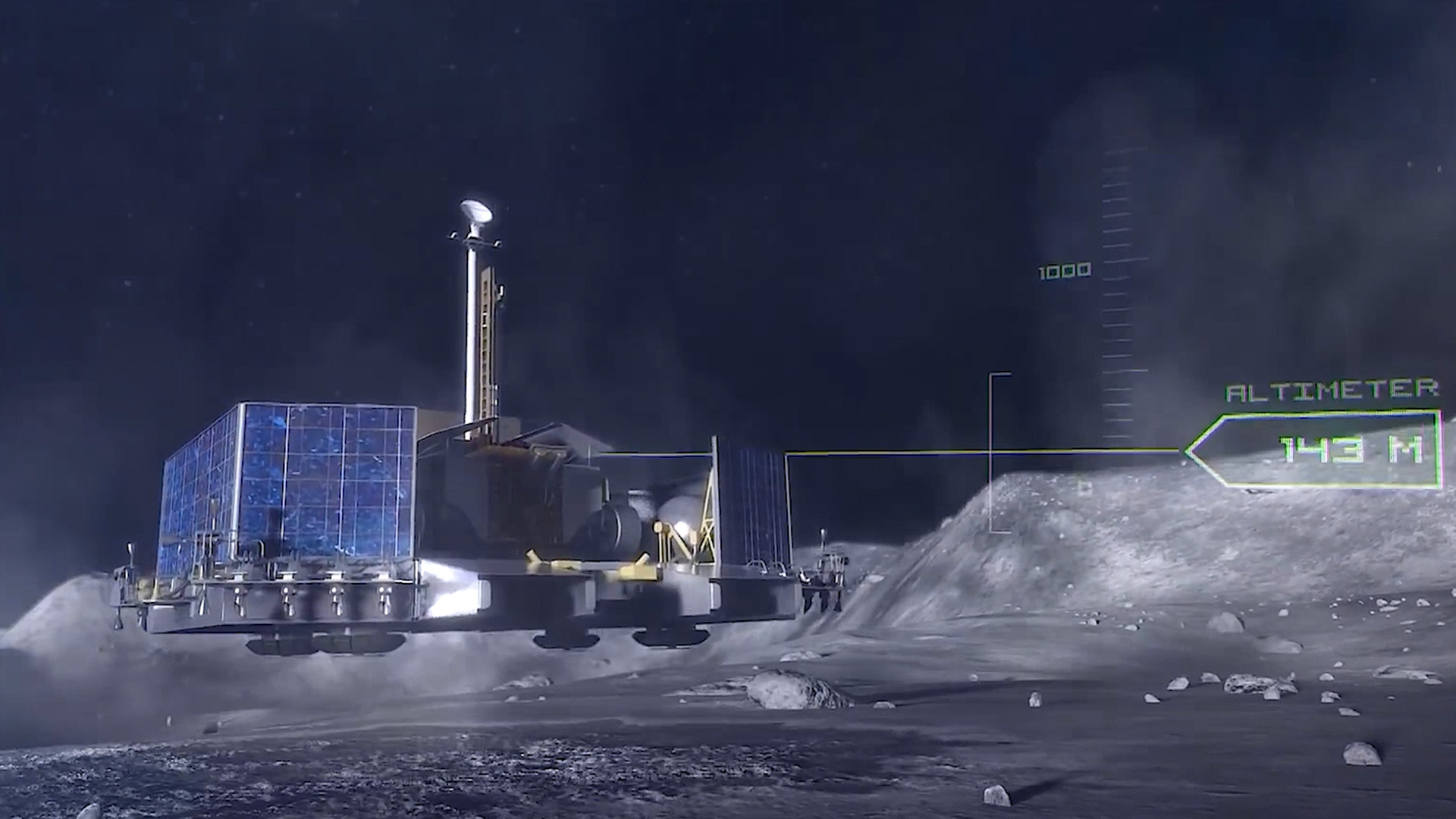
First, lander exhaust plumes. When a spacecraft descends to the lunar surface, its engines fire close to the ground. On the Moon, there is no atmosphere to dissipate the exhaust. The plume kicks up dust and volatiles, which can travel significant distances in the low gravity. If a lander touches down near a PSR, the exhaust can deposit water vapor, combustion byproducts, and other contaminants onto the ice.
Second, rover operations. Rovers exploring the lunar surface generate dust, heat, and mechanical disturbance. Their wheels can physically disrupt ice deposits, and the heat they radiate can cause localized melting or sublimation, altering the ice's composition and structure.
Third, astronaut activity. Every footprint, every tool placement, every sample collection operation risks introducing Earth-based biological material or chemical contamination. The ice at the poles is so cold and stable that any foreign material could remain for millennia, permanently altering the scientific record.
The study emphasizes that contamination is not a future hypothetical. It is an immediate risk. The first Artemis landing sites are being selected now, and once a decision is made, the opportunity to protect certain PSRs may be lost.
The Study's Findings
The NASA-funded study, led by researchers from the Planetary Science Institute and several US universities, models the contamination risk from planned Artemis operations. Its conclusions are sobering.
The study finds that a single landing near a permanently shadowed region could deposit contaminants across an area far larger than previously assumed. Exhaust plume models show that water vapor and combustion gases can travel kilometers in the lunar exosphere, settling onto ice deposits that have remained untouched for eons.
The study recommends establishing exclusion zones around scientifically valuable PSRs. It calls for landing sites to be placed at least several kilometers away from shadowed craters, with rovers and crew operations limited to designated corridors. It also urges NASA to develop and adopt planetary protection standards for the Moon, similar to the protocols already in place for Mars.
Crucially, the study highlights that the window for action is narrow. Once Artemis begins regular landings, the cumulative contamination will grow with each mission. The first few landings will do the most damage because the ice is currently pristine. Every subsequent mission adds to the problem.
Balancing Exploration and Preservation
This creates a genuine dilemma. Artemis exists to explore, to build infrastructure, and to prepare for Mars. Restricting access to the very resources that make those goals possible seems counterproductive. But failing to protect the ice means losing information that no future mission can recover.
A compromise is possible. Scientists can prioritize sampling the most vulnerable ice deposits before large-scale operations begin. Robotic precursor missions could collect core samples from PSRs and cache them for later analysis. Landing sites could be selected to avoid the most scientifically valuable craters while still meeting Artemis objectives. And the International Space Exploration Coordination Group could establish multilateral agreements for lunar planetary protection, ensuring that no single nation's activities compromise resources that belong to all of humanity.
The same concerns apply to Mars. The search for ancient biosignatures on the Red Planet faces identical tensions between exploration and preservation. How we handle the Moon will set a precedent for how we handle Mars.
Bottom Line
The Artemis program represents humanity's most ambitious return to the Moon, but ambition must be paired with responsibility. The ancient ice at the lunar poles is a scientific treasure that cannot be replaced. A few thoughtful decisions now, informed by studies like this one, can ensure that we explore the Moon without erasing its history in the process.