JSW MG Motor India has laid out its most ambitious roadmap yet. The company announced a Rs 1,400 crore investment for FY27 and confirmed plans to launch two new-energy SUVs a battery electric vehicle (BEV) and a plug-in hybrid electric vehicle (PHEV) built on its newly unveiled ADAPT platform. The investment and product blitz mark the joint venture's clearest signal yet that it is betting on a multi-energy future rather than pure EVs alone.
What You Need to Know
- JSW MG Motor India will invest Rs 1,400 crore in FY27 across localisation, new products, and manufacturing capacity expansion as part of a broader Rs 3,000-4,000 crore capex plan.
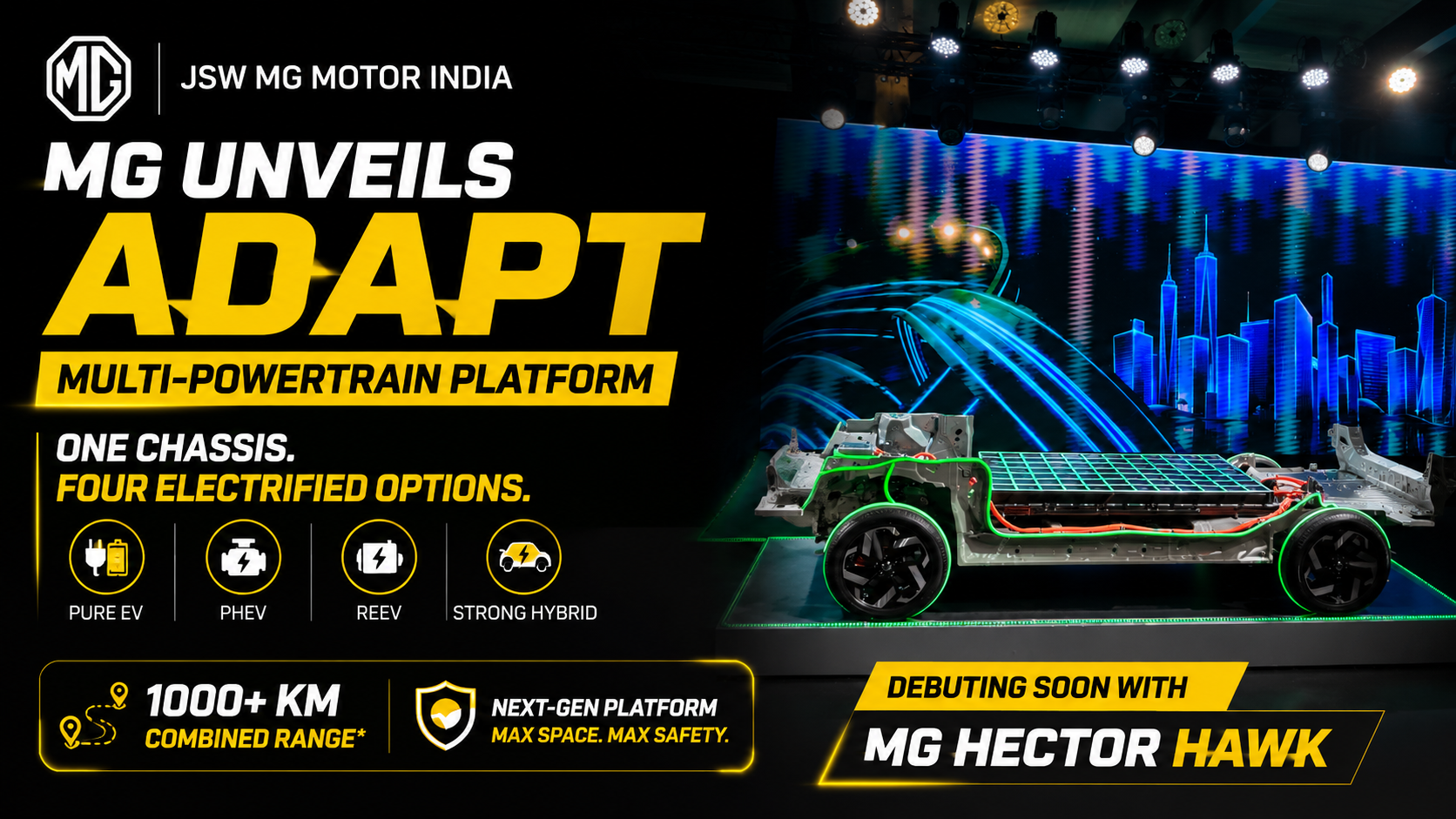
- The ADAPT (Advanced Drive Architecture Platform Technology) platform supports BEV, PHEV, HEV, and REEV powertrains on a single architecture the first multi-energy platform of its kind in India.
- Two new SUVs, both over 4.3 meters long, will launch in FY27: one pure electric and one plug-in hybrid.
- Halol plant capacity will increase from 120,000 to 160,000 units annually by March 2027, with a Phase 2 target of 300,000 units.
- The company is targeting 70 percent localisation for vehicles built on the ADAPT platform.
ADAPT Platform: One Architecture, Every Powertrain
The centerpiece of JSW MG Motor's strategy is the ADAPT platform, which the company says is India's first multi-new energy vehicle architecture. Unlike dedicated EV platforms or traditional ICE platforms, ADAPT is designed from the ground up to accommodate four distinct electrified powertrains on the same production line: battery electric, plug-in hybrid, strong hybrid, and range-extender electric.
The modular approach is a bet on pragmatism. Rather than betting exclusively on BEVs, ADAPT lets JSW MG Motor hedge across technologies as consumer preferences evolve. The platform supports both 400V and 800V electrical architectures, enabling fast charging on future models. A 10-in-1 Intelligent Electric Drive Unit and a dedicated electromagnetic hybrid transmission are integrated into the platform's design.
"Platform development is where the bulk of the capex is spent. By bringing one platform with all four technologies, you reduce your capex requirement by at least half," Anurag Mehrotra, Managing Director of JSW MG Motor India, said during a media roundtable.
The Two New SUVs
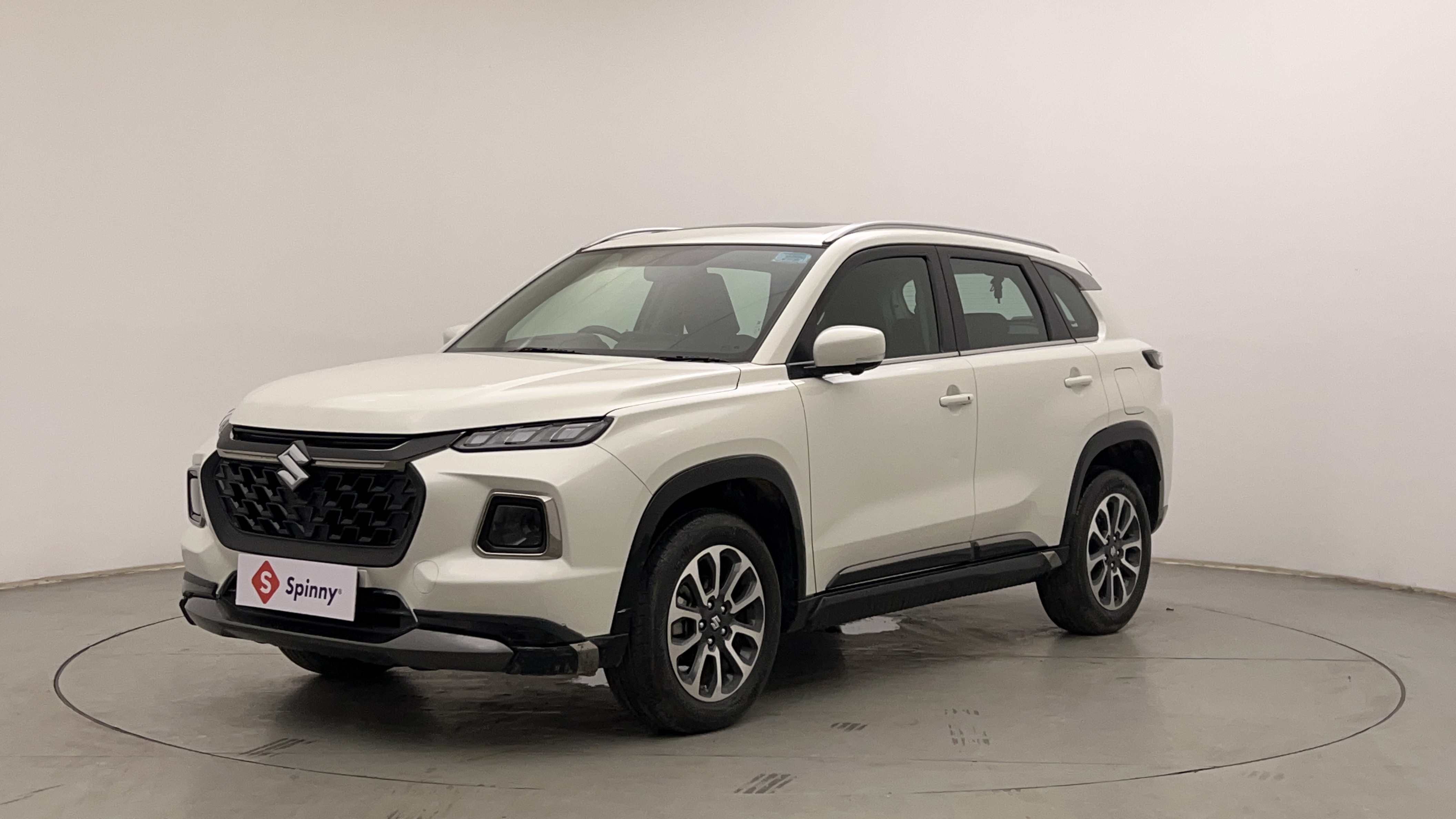
JSW MG Motor confirmed that the first two ADAPT-based products will be SUVs measuring over 4.3 meters in length, placing them in the competitive midsize SUV segment that includes the Hyundai Creta, Kia Seltos, and Maruti Suzuki Grand Vitara. One will be a pure battery electric SUV and the other a plug-in hybrid electric SUV, both expected to arrive before the end of FY27.
The company has not disclosed model names, but the SUVs will be derived from parent SAIC Motor's global platforms with significant tuning for Indian road conditions, ground clearance requirements, and thermal management. Mehrotra confirmed that the products are global in origin but will be heavily adapted for local driving conditions.
Industry speculation points toward the MG Hector Hawk as a likely candidate for the PHEV model, possibly drawing from the Wuling Starlight 560 platform that SAIC sells in other emerging markets.
Rs 1,400 Crore Investment Details
The Rs 1,400 crore earmarked for FY27 will be deployed across three buckets: localisation of components and technologies, new product development, and manufacturing capacity expansion. The investment is part of a broader Rs 3,000-4,000 crore capital expenditure programme that JSW MG Motor outlined earlier this year.
Mehrotra confirmed the company is on track with that commitment. "The good news is that we are still delivering to that plan. This year we would invest close to about Rs 1,400 crore," he said.
Halol Plant Expansion
JSW MG Motor's manufacturing facility in Halol, Gujarat, is undergoing a phased expansion. Phase 1 will increase annual production capacity from 120,000 units to 160,000 units, with completion targeted by March 2027. A second phase, expected to begin in the following fiscal year, will push capacity toward 300,000 units annually.
The expansion is necessary. JSW MG Motor sold 5,861 units in June, up 17 percent from May, and capacity constraints have limited the company's ability to fully capitalise on growing demand for its existing lineup, which includes the Windsor EV, Comet EV, and the recently announced IM6 premium electric SUV.
Localisation Push
The ADAPT platform is central to JSW MG Motor's localisation strategy. The company is targeting 70 percent localisation for vehicles built on the architecture, up from current levels where the Comet EV has reached nearly 60 percent localisation. Battery packs are already assembled at the Halol plant, though battery cells continue to be imported.
Higher localisation helps JSW MG Motor insulate itself from currency fluctuations, reduce supply chain risks, and improve cost competitiveness in a price-sensitive market. It also aligns with the Indian government's Production Linked Incentive (PLI) scheme for automotive and advanced chemistry cell manufacturing.
Why ADAPT Matters for India
JSW MG Motor's multi-energy approach reflects a growing recognition that India's automotive transition will not follow a straight line from ICE to BEV. Charging infrastructure remains patchy, range anxiety is real for many buyers, and the price premium for full EVs limits addressable market size. By offering PHEVs and strong hybrids alongside pure EVs, JSW MG Motor can serve customers at different points on the adoption curve.
The company's EV registrations for January-June 2026 stood at 31,741 units, up 18 percent year on year, but the broader EV passenger vehicle market expanded nearly 82 percent in the same period. MG's market share in the EV segment declined to around 21 percent from 32.3 percent a year ago as Tata Motors and Mahindra accelerated their EV rollouts. The ADAPT strategy is as much about arresting that decline as it is about capturing new customers.
Bottom Line
JSW MG Motor's Rs 1,400 crore investment and the ADAPT platform represent a calculated multi-energy bet for India. By launching both a BEV and a PHEV on a common architecture, the company gains manufacturing flexibility, reduces development costs, and hedges against an uncertain transition timeline. The Halol expansion and localisation push add credibility. If the two new SUVs are priced competitively, JSW MG Motor could regain momentum in a market that is moving faster than its current product lineup can keep up with.