For the first time, scientists have confirmed that a rocky planet in the habitable zone of another star has an atmosphere. The discovery, published in Science on July 16 by a team led by Harvard University astronomer Collin Cherubim, answers a question astronomers have chased for decades: can Earth-like worlds beyond our solar system hold onto the gaseous envelopes needed for life?
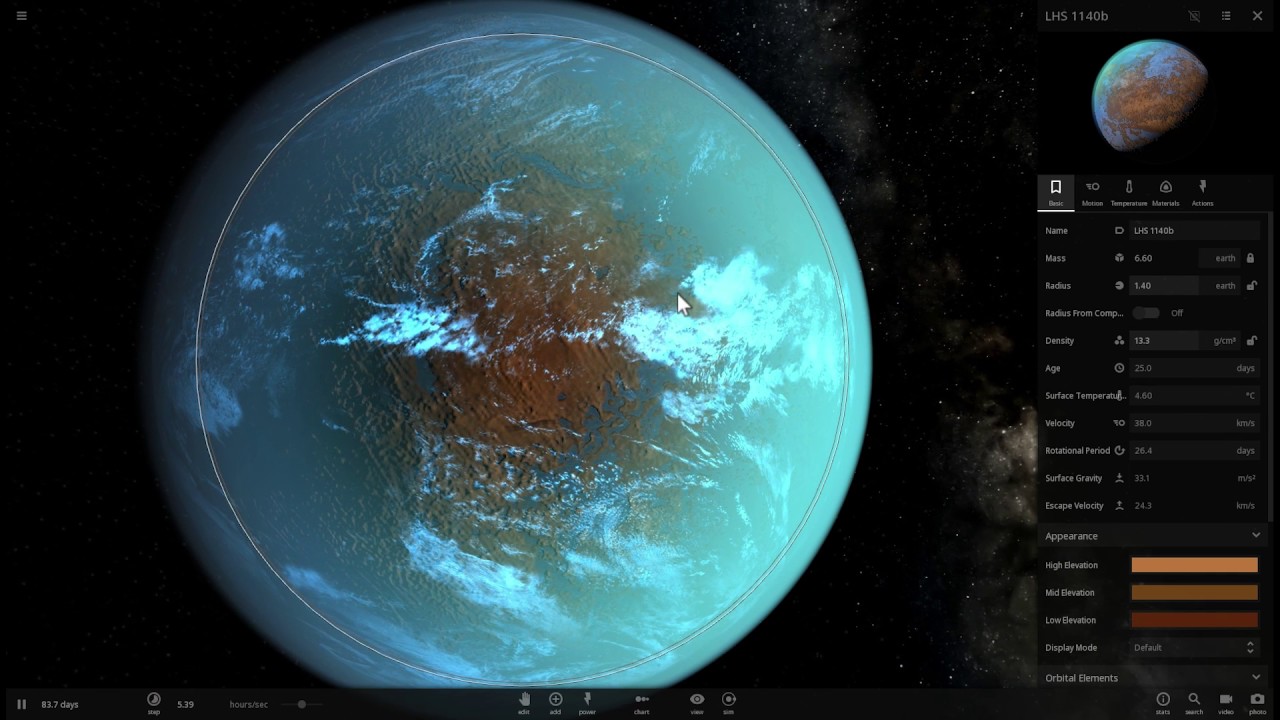
LHS 1140b, a super-Earth roughly 49 light-years away in the constellation Cetus, now holds that distinction.
What You Need to Know
- Harvard researchers detected helium escaping from LHS 1140b, confirming the planet retains an atmosphere, the first such detection on a rocky world in a habitable zone.
- The planet is 5.6 times Earth mass and 70 percent larger in radius, orbiting a quiet red dwarf star every 25 days.
- The atmosphere was detected in 2024 but not in 2025, suggesting the escape rate varies with stellar activity, not that the planet lost its atmosphere.
- The team used a novel technique on a ground-based telescope in Chile, opening a faster path to surveying dozens of rocky worlds for atmospheres.
The Breakthrough
Before this study, every confirmed exoplanet atmosphere belonged to gas giants or blistering hot rocky worlds where surface temperatures exceed 1,000 degrees Celsius. Temperate rocky planets, the kind that could host liquid water, remained stubbornly opaque to atmospheric studies.
Cherubim, who completed his PhD at Harvard in 2026, took a different approach. Instead of relying on space telescopes like the James Webb Space Telescope, which requires months of careful scheduling, he turned to the Magellan Clay Telescope at Las Campanas Observatory in the Chilean Andes. Using the WINERED spectrograph, he searched for the spectral fingerprint of helium, a light gas that escapes planetary atmospheres and forms a detectable cloud around the planet.
The technique had been used on gas giants but never on a rocky world in the habitable zone. In fact, most researchers assumed Earth-like planets would not retain enough helium to detect.
Nobody bothered looking for helium on a rocky Earth-like planet, especially at Earth-like temperatures, Cherubim said. People thought it would be a waste of time.
A Rare Double Transit
The observations depended on a stroke of timing. On September 23, 2024, LHS 1140b and a smaller companion planet, LHS 1140c, passed in front of their host star within 39 minutes of each other, an alignment that would not repeat for at least 50 years. Cherubim secured telescope time and captured both transits in a single session.
The data showed helium absorption around LHS 1140b, confirming an extended upper atmosphere. LHS 1140c showed no such signal, suggesting the closer-in planet may have already lost its atmosphere entirely.
When the team re-observed LHS 1140b in 2025, the helium signal had vanished. The disappearance does not mean the planet lost its atmosphere. Instead, the researchers attribute the change to variability in the star ultraviolet output affecting the excitation state of the escaping helium.
What the Atmosphere Tells Us
Helium alone is not a biosignature. It cannot support life. But its presence confirms that LHS 1140b has met all three criteria scientists consider necessary for a potentially habitable world: it is rocky, it orbits at the right temperature for liquid water, and it has an atmosphere.
The detection of the upper helium layer also tells scientists what is likely below. Climate models from the same team suggest the planet may be a water world, with up to 10 percent of its mass in water, compared to Earth 0.02 percent. Deeper in the atmosphere, models predict water vapor, carbon dioxide, carbon monoxide, and possibly molecular oxygen, the kind of mix that would warrant closer scrutiny for biological activity.
A Faster Way to Find Atmospheres
The ground-based technique Cherubim demonstrated could accelerate the search for habitable exoplanets significantly. While the James Webb Space Telescope can probe exoplanet atmospheres in exquisite detail, its time is oversubscribed. Each target requires hours or days of observation.
Ground-based helium detection, by contrast, is relatively quick and cheap. Cherubim has already identified about 30 candidate planets where the method could work and has been awarded telescope time to observe an LHS 1140b twin around a similar star. If the technique scales, astronomers could survey dozens of rocky worlds from the ground before committing JWST time to the most promising targets.
This is just the first discovery of many to come, Cherubim said.
Upcoming Observations
LHS 1140b is already scheduled for follow-up observations under the Rocky Worlds Director Discretionary Time program, which gives dedicated JWST and Hubble time to study rocky exoplanet atmospheres. The key question is whether deeper observations detect water. That would shift the debate from could this planet be habitable to what kind of habitable world is this.
The next four to five years of data will focus on searching for water vapor in the lower atmosphere. If it is found, it would suggest a stable atmospheric cycle, bringing scientists closer than ever to answering whether life exists beyond Earth.
Bottom Line
For the first time, astronomers have confirmed an atmosphere on a rocky planet in the habitable zone of another star. The discovery does not prove life exists on LHS 1140b, but it proves that the kind of planet that could support life is real, nearby, and ready to be studied.