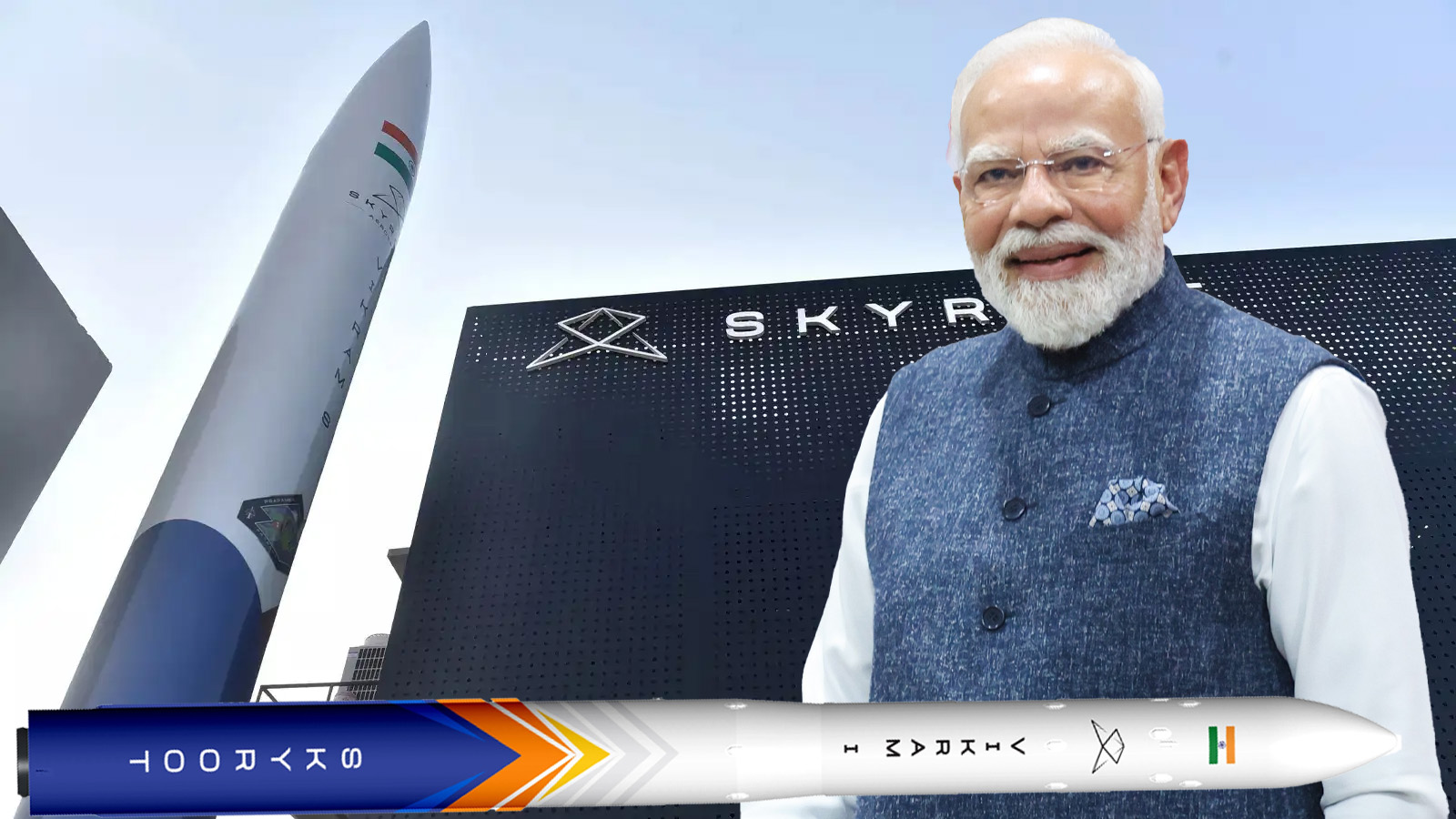
India entered a new era of spaceflight on July 18 when Skyroot Aerospace Vikram-1 lifted off from the Satish Dhawan Space Centre in Sriharikota and successfully reached low Earth orbit. Mission Aagaman, Sanskrit for arrival, made India only the third country in the world after the United States and China with a private company capable of launching orbital rockets. Vikram-1 deployed six payloads into a 450-kilometre orbit, including satellites, technology demonstrators, and a handwritten postcard from Prime Minister Narendra Modi.
What You Need to Know
- Skyroot Aerospace Vikram-1 became India first privately developed orbital rocket to reach space on its maiden attempt.
- The rocket successfully deployed six payloads into a 450 km low Earth orbit at a 60-degree inclination.
- India is now the third country after the US and China to have private orbital launch capability.
- Vikram-1 is built with an all-carbon composite structure and 3D-printed engines, capable of carrying 350 kg to LEO.
- Skyroot plans commercial flights after one or two more test missions, with Vikram-2 targeting 1,000 kg to LEO by 2027.
The Launch
The countdown at Sriharikota First Launch Pad saw a brief hold at the five-minute mark, but after a 35-minute delay, Vikram-1 roared to life at 12:05 PM IST. The four-stage, 22-metre-tall rocket burned through its solid-fuel first stage and ascended through a nominal trajectory. Within 17 minutes of liftoff, the mission director confirmed that all payloads had been successfully deployed.
Pawan Kumar Chandana, co-founder and CEO of Skyroot Aerospace, called the mission a grand success. He highlighted that the rocket validated every principal milestone, including propulsion, avionics, guidance, navigation, and control systems under real flight conditions.
The Payloads
Vikram-1 carried a diverse set of payloads. SCOPE, a technology demonstration satellite built by Skyroot itself, and SOLARAS S3 from Grahaa Space were deployed as operational satellites. Cosmoserve Space EMBRACE payload, a robotic arm designed for orbital debris capture, was also on board. German company DCubed sent two technology demonstration payloads.
The rocket also carried symbolic cargo: Cosmic Bloom, an artwork created from lab-grown diamonds by Cosmos Diamonds, and an 18-karat gold micro-rocket bearing microscopic sculptures of C.V. Raman, Vikram Sarabhai, and A.P.J. Abdul Kalam. PM Modi handwritten postcard inscribed with Vande Mataram was also on board, alongside hundreds of postcards from engineers and well-wishers.
The Technology
Vikram-1 is built around an all-carbon composite airframe that is roughly five times lighter and stronger than traditional steel rocket bodies. Its propulsion systems, including 3D-printed engines and high-thrust solid motors, were developed entirely in-house. The rocket features India longest monolithic carbon-composite stage and ultra-low-shock pneumatic separation systems designed to protect delicate payloads during deployment.
The vehicle can carry up to 350 kilograms to low Earth orbit and about 260 kilograms to Sun-synchronous orbit, targeting the growing global market for dedicated small satellite launches.
India Private Sector Milestone
The success of Vikram-1 is the culmination of space sector reforms that began with the Indian Space Policy 2023, which opened satellite and launch vehicle operations to private companies. IN-SPACe, the government agency overseeing private space activities, provided the launch authorization. From a single space startup in 2014, India now has more than 400 companies working across launch vehicles, satellites, and downstream applications.
PM Modi personally called the Skyroot team after the launch, calling it a defining moment in India space journey. The growing participation of our private sector is opening new frontiers and accelerating innovation, he told the founders.
What Comes Next
Skyroot plans one or two more developmental missions before declaring Vikram-1 commercially operational. The company envisions an on-demand launch service for small satellites, comparing its model to a cab service to space. Beyond Vikram-1, the company is developing Vikram-2, a larger vehicle capable of carrying 1,000 kg to low Earth orbit, with a target maiden flight in 2027. A fully reusable launch vehicle is also on the roadmap, aimed at further reducing the cost of reaching orbit.
Bottom Line
Skyroot Vikram-1 successful orbital flight is a landmark moment for India space programme. It proves that Indian private industry can design, build, and fly orbital-class launch vehicles, competing on the global stage. For a company founded in 2018 to achieve orbit on its first attempt places Skyroot in rare company internationally, and signals that India space ecosystem has entered a new phase of maturity and ambition.