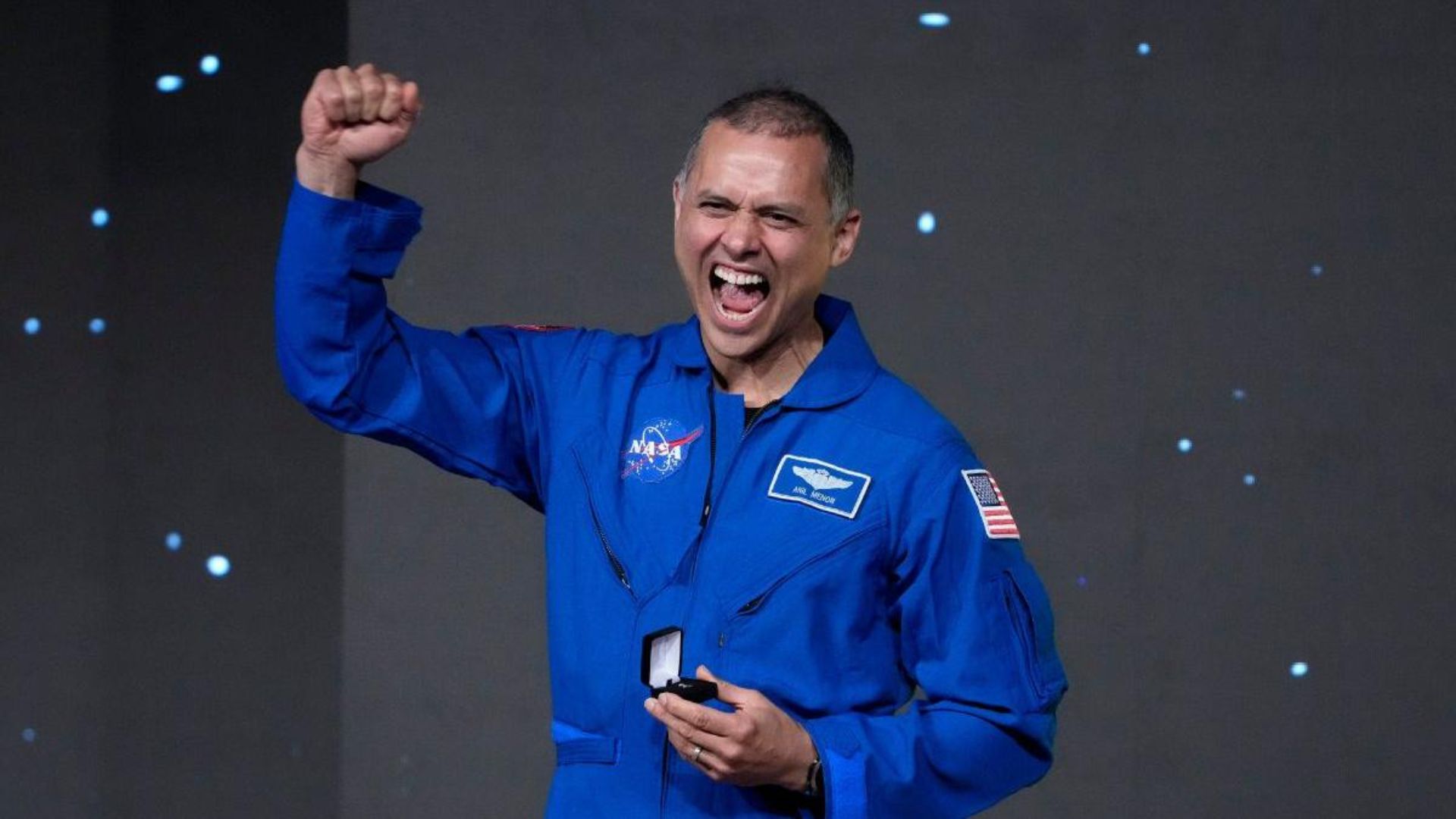
NASA astronaut Anil Menon launched aboard the Roscosmos Soyuz MS-29 spacecraft on July 14, 2026, from Baikonur Cosmodrome in Kazakhstan, becoming the first Indian-origin NASA astronaut to fly to space. He is accompanied by Roscosmos cosmonauts Pyotr Dubrov and Anna Kikina on a mission to the International Space Station as part of Expedition 75.
What You Need to Know
- Anil Menon launched July 14 at 14:47 UTC aboard Soyuz MS-29 from Baikonur Cosmodrome
- He is the first Indian-origin NASA astronaut to fly to space, serving as flight engineer on Expedition 75
- The Soyuz docked with the ISS Prichal module at 17:52 UTC on the same day
- The crew will remain aboard the station until April 2027
- Anil Menon was selected as a NASA astronaut in 2021 and this is his first spaceflight
Who Is Anil Menon
Anil Menon was selected by NASA as part of the 2021 astronaut class, the first class to require candidates to hold a master's degree in a STEM field. Before joining NASA, he worked as a flight surgeon for the agency, providing medical support for astronaut training and missions. His background combines medicine and aerospace, making him a valuable addition to the Expedition 75 crew.
Menon is of Indian origin, and his flight has drawn significant attention in India, where space enthusiasts have followed the mission closely. While India has sent its own astronauts to space through ISRO's Gaganyaan program, Menon represents a different path one taken by an Indian-American through NASA's astronaut corps.
The Soyuz MS-29 Mission
The Soyuz MS-29 spacecraft launched atop a Soyuz-2.1a rocket from Site 31/6 at Baikonur. The flight followed a standard three-hour rendezvous profile, docking with the station's Prichal module at 17:52 UTC. The crew joined the existing Expedition 75 team already aboard the ISS.
Dubrov serves as commander of the Soyuz, with Kikina as flight engineer and Menon as flight engineer. This is Dubrov's second spaceflight and Kikina's second as well, while Menon is making his first journey to orbit. The crew will remain on station until April 2027, conducting scientific experiments, station maintenance, and possibly spacewalks.
Scientific Work Ahead
During their time on the ISS, the Expedition 75 crew will conduct research across multiple disciplines including biology, physics, materials science, and human health studies. Menon's medical background is expected to be particularly valuable for studies on the long-term effects of microgravity on the human body.
Significance for India
Menon's flight has resonated deeply in India, where the space program is experiencing a golden age. ISRO's Gaganyaan program is progressing toward its first crewed launch, and having an Indian-origin astronaut on the ISS reinforces the human spaceflight ambitions of the country. His journey also highlights the growing collaboration between NASA and ISRO in human spaceflight.
How to Stay Updated
NASA provides continuous coverage of ISS activities through its website and NASA+ streaming service. The ISS crew frequently posts updates on social media. Expedition 75 will span multiple months, with regular milestones including cargo resupply missions, spacewalks, and research announcements.
Bottom Line
Anil Menon's launch on Soyuz MS-29 marks a milestone for Indian-origin representation in human spaceflight. As Expedition 75 settles into its rhythm aboard the ISS, his work will contribute to the scientific knowledge that will enable longer duration missions to the Moon and Mars.