ISRO's most ambitious lunar mission yet is taking shape. Chandrayaan-4, India's first attempt to bring back samples from the Moon, is now firmly targeting a 2028 launch window. New details from a Parliamentary Standing Committee report and recent statements from ISRO Chairman V Narayanan confirm the mission's scope, its landing site, and a significant change in its launch vehicle configuration.
What You Need to Know
- Chandrayaan-4, India's first lunar sample return mission, is targeting a 2028 launch on the LVM-3 rocket
- The mission will land at the MM-4 site in the Mons Mouton region of the Moon's south pole
- ISRO has switched plans -- the mission will use a pair of LVM-3 rockets instead of waiting for the semi-cryogenic engine upgrade
- The lander will weigh 6,800 kg and the rover 350 kg, dwarfing Chandrayaan-3's 1,600 kg lander and 25 kg rover
A Mission Five Times Heavier Than Chandrayaan-3
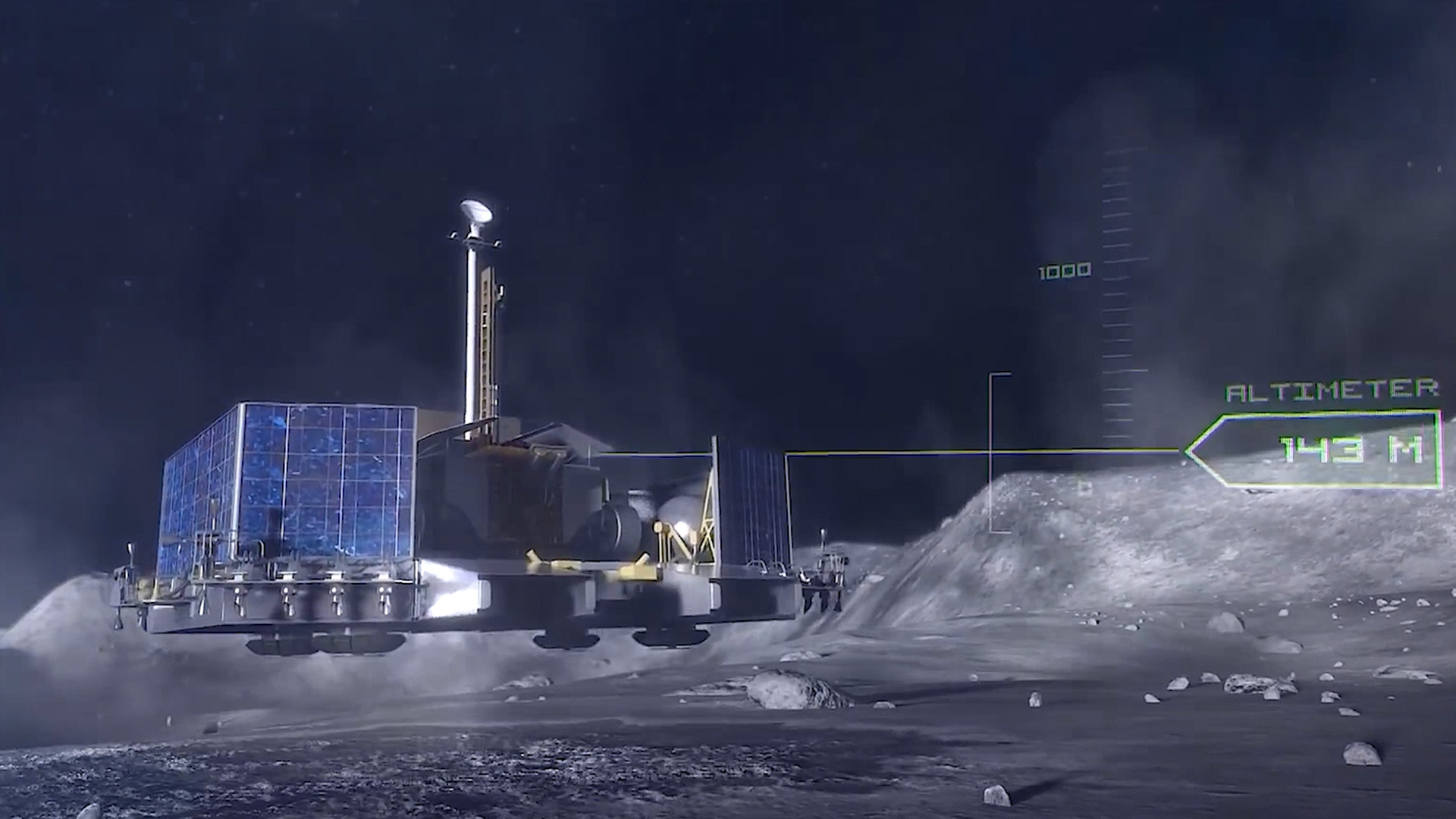
Chandrayaan-4 is structurally unlike any Indian mission that has come before. It comprises five distinct modules: a propulsion module, a descender module, an ascender module, a transfer module, and a re-entry module. The descender and ascender stack will make the actual soft landing on the lunar surface, while the transfer and re-entry modules handle the journey back to Earth with collected samples.
The sheer scale is staggering. ISRO Chairman V Narayanan confirmed the lander alone will weigh 6,800 kg -- more than four times the mass of Chandrayaan-3's 1,600 kg lander. The rover jumps from 25 kg to 350 kg. This is not merely a repeat of the 2023 mission with a sample scoop attached; it is an entirely different class of lunar exploration.
The Landing Site: Mons Mouton's MM-4
ISRO has already selected the landing site. After evaluating four candidate locations in the Mons Mouton region -- designated MM-1, MM-3, MM-4, and MM-5 -- the agency settled on MM-4. A one-kilometer-square area around the site offers the least hazardous terrain, a mean slope of 5 degrees, and the highest number of hazard-free landing grids measuring 24 meters by 24 meters.
Mons Mouton is located in the lunar south polar region, an area of intense global interest because of the presence of water ice in permanently shadowed craters. The site was characterized using high-resolution images from the Orbiter High Resolution Camera onboard Chandrayaan-2's orbiter.
Why ISRO Changed the Rocket Midway
One of the most significant developments is ISRO's decision to change the launch vehicle configuration. Earlier plans called for Chandrayaan-4 to fly on an upgraded LVM-3 equipped with a semi-cryogenic booster engine. That engine, which burns kerosene and liquid oxygen instead of the current cryogenic stage's hydrogen and oxygen, promised significantly higher payload capacity.
However, the semi-cryogenic engine has never flown. Development is now expected to be completed in the 2028-29 timeframe. Rather than wait, ISRO has decided to launch Chandrayaan-4 using a pair of standard LVM-3 rockets without the upgrade. This dual-launch approach will assemble the mission's components in lunar orbit before the landing attempt.
ISRO is also constructing a third launch pad at Sriharikota, expected to be ready by 2029-30, which will support the increased launch cadence these complex missions demand.
What Comes Next
Chandrayaan-4 is part of a broader wave of Indian deep space missions. The Parliamentary report also reveals target dates for Chandrayaan-5 (LUPEX), a joint mission with JAXA, planned for September 2028. Before that, ISRO aims to launch Shukrayaan, its first Venus orbiter, in March 2028. The first module of the Bharatiya Antariksh Station is targeted for 2028 as well, and ISRO has its sights set on a crewed Moon landing by 2040.
Bottom Line
Chandrayaan-4 represents India's boldest step in lunar exploration -- returning physical samples from the Moon's south pole. The decision to proceed with proven LVM-3 rockets rather than waiting for unproven technology shows ISRO's growing confidence in mission planning. If 2028 goes according to plan, India will join an exclusive club of nations that have brought pieces of the Moon back to Earth.