India's Chandrayaan-3 mission has done it again. More than two years after its historic soft landing near the Moon's south pole, scientists have uncovered a remarkable connection between the soil at its landing site and the first lunar meteorite ever found on Earth. The discovery is helping researchers solve one of planetary science's longest standing puzzles: matching meteorites that fall to Earth with the exact places they came from on the Moon.
A new study published in npj Space Exploration by scientists at the Physical Research Laboratory (PRL) in Ahmedabad reveals that the elemental composition of the lunar soil at Shiv Shakti Point closely matches that of ALHA 81005, a meteorite discovered in Antarctica's Allan Hills region in 1981. ALHA 81005 holds a special distinction it was the very first meteorite ever confirmed to have originated from the Moon.
What You Need to Know
- Chandrayaan-3's Pragyan rover used its Alpha Particle X-ray Spectrometer (APXS) to measure the chemical makeup of lunar soil at Shiv Shakti Point, and the composition closely matches the ALHA 81005 meteorite found in Antarctica in 1981
- The landing site soil is not uniform it contains material from multiple layers of the Moon's crust, including deeper magnesium-rich rocks likely excavated by the ancient South Pole-Aitken basin impact
- The findings help solve a long standing problem in lunar science: connecting meteorites found on Earth to their specific regions of origin on the Moon
- The study also supports the Lunar Magma Ocean hypothesis, which describes how the Moon's crust formed from a global magma ocean in its early history
The Meteorite That Changed Lunar Science
ALHA 81005 was found in the Allan Hills region of Antarctica during the 1981-82 field season. When scientists analyzed its composition, they realized it was unlike any ordinary meteorite. Its mineralogy and chemistry matched rock samples brought back by NASA's Apollo missions, confirming that it had been blasted off the Moon by an asteroid impact and later fell to Earth.
Before ALHA 81005, scientists had no definitive proof that meteorites from the Moon could reach Earth. Its discovery opened an entirely new field of lunar research, giving scientists access to Moon rocks without needing to launch additional spacecraft. But there was always a catch: no one knew which part of the Moon these meteorites came from.
What the APXS Data Revealed
The Pragyan rover's APXS instrument conducted 23 measurements of the lunar soil around the Chandrayaan-3 landing site. When PRL scientists compared this data against 66 known lunar meteorites, ALHA 81005 emerged as the closest geochemical match.
Both the Shiv Shakti soil and the Antarctic meteorite share a rare compositional signature that sits between two major lunar rock groups: ferroan anorthosites (FAN), which make up the Moon's ancient primary crust, and Mg-suite rocks, which formed from later magma intrusions. Both contain nearly identical amounts of aluminum oxide (Al2O3) and combined iron oxide with magnesium oxide (FeO+MgO).
The study found that Shiv Shakti Point has lower aluminum and higher iron and magnesium compared with typical lunar highland regions. The olivine-to-pyroxene ratio is also higher than the Moon's average Feldspathic Highland Terrain (FHT).
A Window Into the Moon's Hidden Layers
Perhaps the most important finding is that the soil at Shiv Shakti Point is not composed of a single rock type. Instead, it is a mixture of materials from different depths of the Moon's crust.
The landing site sits approximately 350 kilometers from the rim of the South Pole-Aitken (SPA) basin, one of the largest and oldest impact craters in the solar system. Scientists believe that the colossal impact that formed the SPA basin excavated material from deep within the Moon's crust and scattered it across the surrounding region. This would explain why magnesium-rich rocks, likely originating from the lower crust or upper mantle, are found mixed into the surface soil at Shiv Shakti Point.
The study confirms that repeated asteroid impacts over billions of years have continuously "gardened" the lunar surface, churning up ancient material from different geological layers. This process has created a complex geological record at the landing site that preserves evidence of the Moon's evolution from its earliest days.
Connecting Meteorites to the Moon
The discovery has a practical value that goes beyond pure science. For decades, researchers studying lunar meteorites had no way of knowing which region of the Moon they sampled. This study provides a reference point, showing that ALHA 81005 type material exists at the Chandrayaan-3 landing site in the southern feldspathic highlands.
While scientists emphasize that ALHA 81005 did not originate specifically from Shiv Shakti Point, the geochemical match suggests both represent a similar type of magnesium-rich lunar crust and regolith. This gives researchers a new tool for interpreting the thousands of lunar meteorites in collections worldwide.
Chandrayaan-3's Continuing Legacy
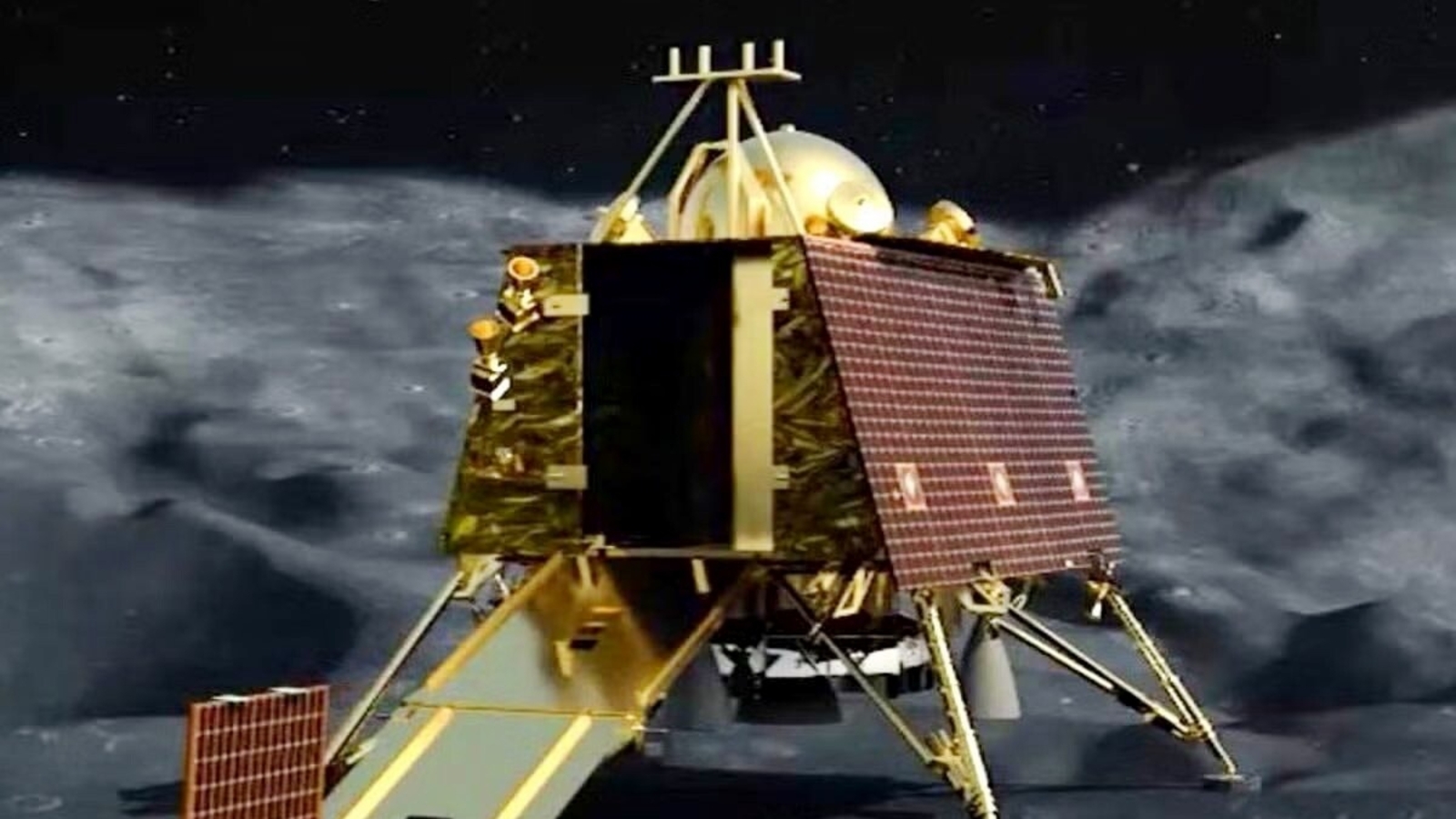
Chandrayaan-3 made history on August 23, 2023, when its Vikram lander touched down at 69.37 degrees south, 32.32 degrees east, making India the first country to successfully land a spacecraft near the Moon's south pole. The Pragyan rover operated for one lunar day (about 14 Earth days), traversing the surface and conducting experiments.
This study is the latest in a series of scientific discoveries from the mission's data. Earlier findings confirmed the presence of sulfur, aluminum, silicon, calcium, and iron in the lunar soil, provided temperature profiles of the southern high latitude regolith, and detected月球quake activity.
The research was led by scientists from PRL Ahmedabad, with collaborators from across ISRO's network of research institutions. The study builds on earlier APXS results published in Nature in 2024, which provided the first in situ elemental abundance measurements from the Moon's southern high latitudes.
Bottom Line
Chandrayaan-3's data has done something no mission has done before: it has linked a specific location on the Moon to one of the most important lunar meteorites ever found. The discovery not only deepens our understanding of how the Moon's crust formed and evolved, but it also gives scientists a powerful new reference point for decoding the origin of lunar meteorites that fall to Earth. For India's space program, it is yet another demonstration that the science from Chandrayaan-3 will keep yielding discoveries for years to come.