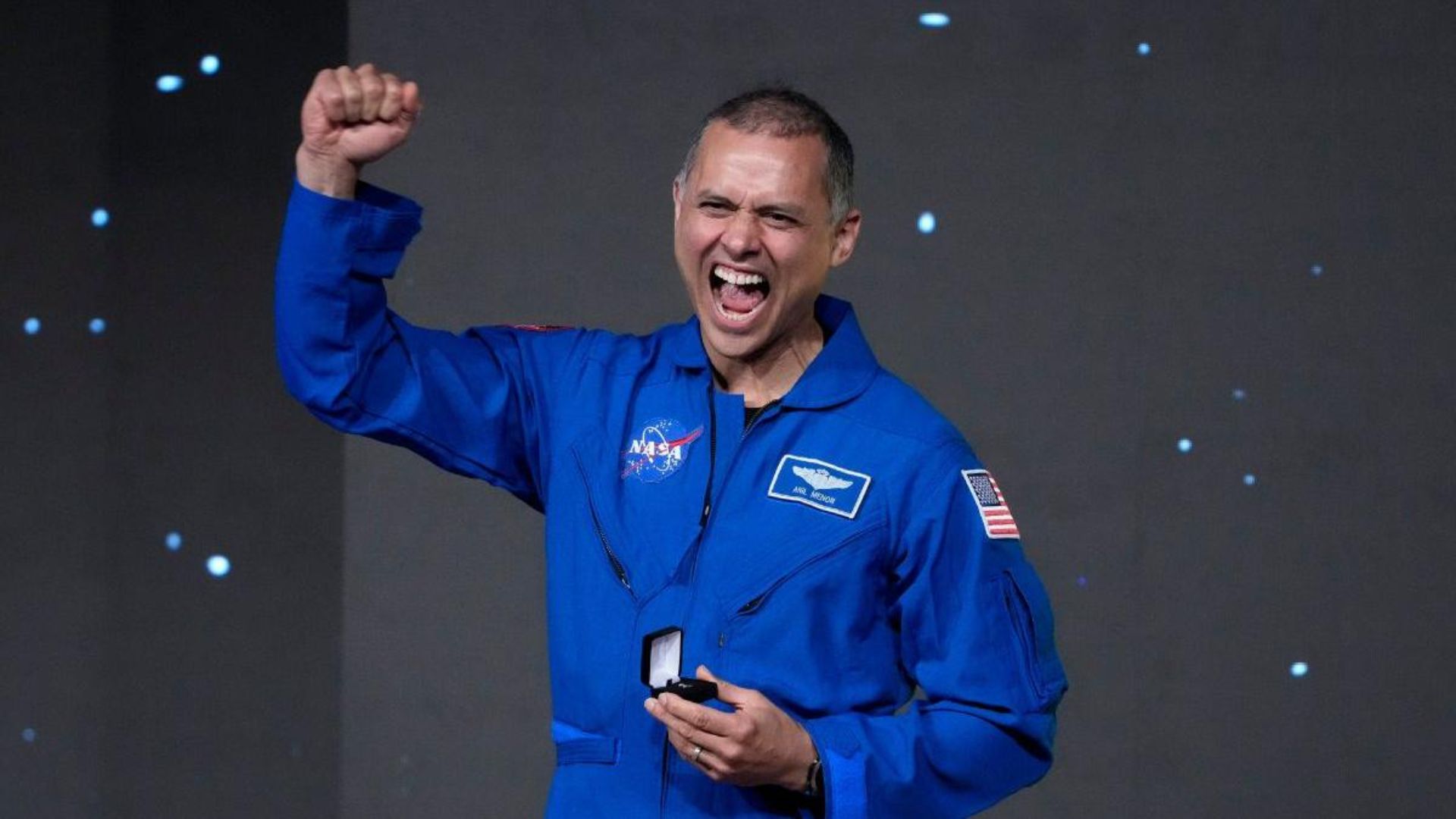
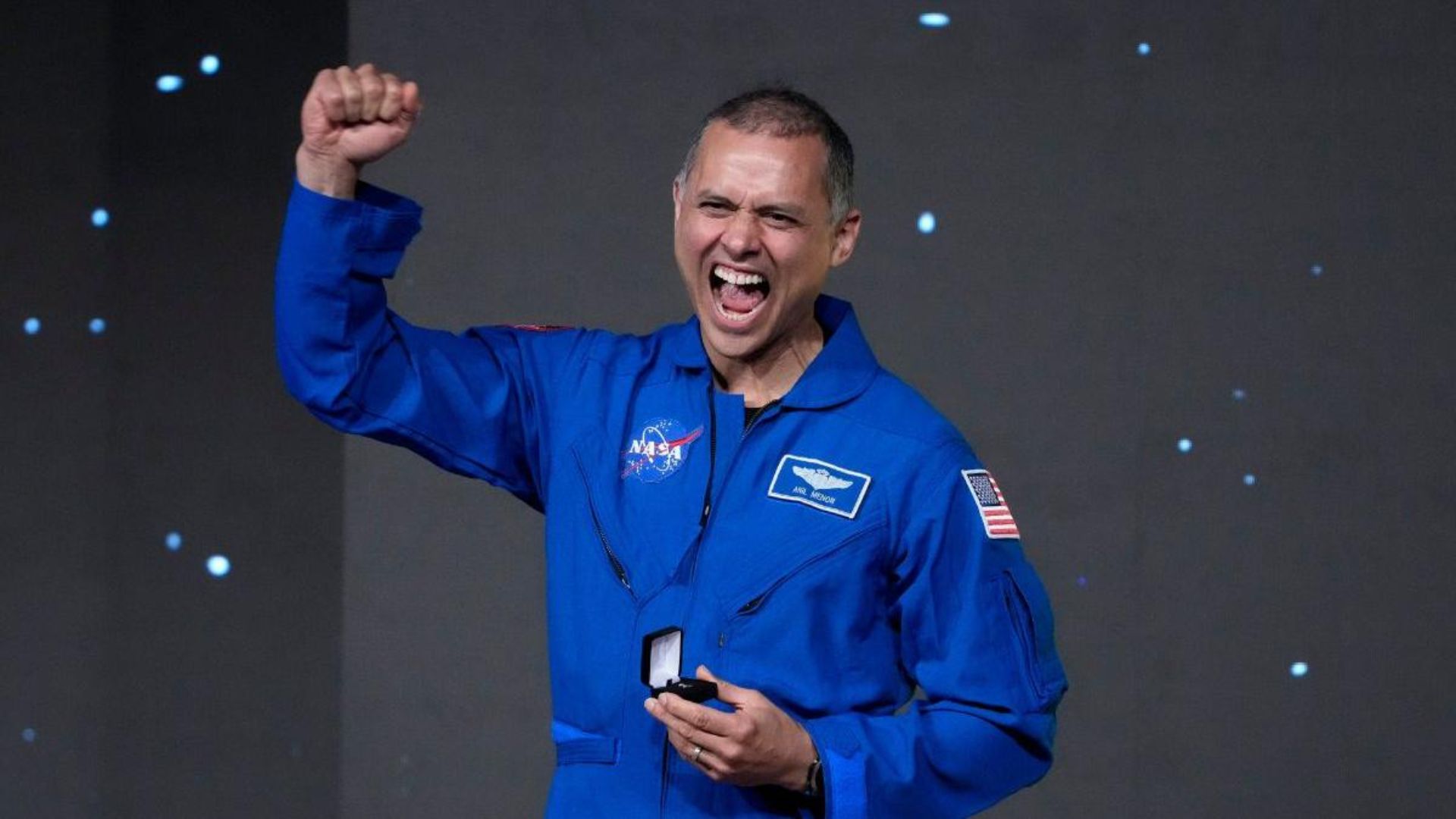
Indian-origin NASA astronaut Anil Menon is making history today as he launches aboard the Roscosmos Soyuz MS-29 spacecraft from the Baikonur Cosmodrome in Kazakhstan, beginning his first journey to the International Space Station at the age of 49. The Harvard- and Stanford-trained physician turned astronaut will spend the next eight months conducting cutting-edge research in microgravity.
What You Need to Know
- Anil Menon, 49, launches today at 10:47 a.m. EDT (8:17 p.m. IST) aboard Soyuz MS-29 from Baikonur Cosmodrome alongside Russian cosmonauts Pyotr Dubrov and Anna Kikina
- The Indian-origin NASA astronaut will spend eight months aboard the ISS as part of Expedition 74/75, returning to Earth in April 2027
- Menon brings a unique background as an emergency medicine physician, former US Air Force flight surgeon, and SpaceX's first flight surgeon before joining NASA's 2021 astronaut class
- His research includes in-space semiconductor manufacturing, AI-assisted ultrasound, blood flow studies, and bioprinting - all critical for future Moon and Mars missions
The Journey to Space
Born in Minneapolis to Indian and Ukrainian immigrant parents, Menon's path to space reads like a masterclass in multidisciplinary excellence. He earned degrees from Harvard and Stanford in neurobiology, engineering, and medicine before serving as a US Air Force physician in Afghanistan during Operation Enduring Freedom. He also volunteered with the Himalayan Rescue Association, providing medical care to climbers on Mount Everest.
His connection to India runs deep. Menon spent a year in the country as a Rotary Ambassadorial Scholar, where he supported polio vaccination initiatives. That experience, he has said, shaped his understanding of global healthcare challenges.
Menon joined NASA in 2014 as a flight surgeon, supporting astronauts aboard the ISS. In 2018, he moved to SpaceX as the company's first flight surgeon, helping establish medical protocols for commercial human spaceflight. NASA selected him as an astronaut in December 2021, and he completed the two-year training program in 2024.
"Anil represents the best of what NASA stands for - excellence in medicine, engineering, and exploration," said NASA Chief Astronaut Joe Acaba in a statement. "His experience bridging clinical medicine with spaceflight operations makes him uniquely qualified for this mission."
What He Will Do on the ISS
Menon's research agenda aboard the ISS focuses on technologies and discoveries that will enable longer human missions beyond low-Earth orbit.
He will continue experiments on in-space production of semiconductor crystals, a process that could enable large-scale manufacturing of components for high-performance computers and artificial intelligence systems. Microgravity allows crystals to form with fewer defects than on Earth, potentially revolutionizing electronics manufacturing.
Menon will also test ultrasound procedures using augmented reality and artificial intelligence methods. If successful, this technology could eliminate the need for real-time medical support from Earth during deep-space missions - a critical capability for journeys to the Moon and Mars.
He will serve as a test subject for studies examining how blood flow changes in microgravity, helping researchers understand cardiovascular deconditioning during long-duration spaceflight. And he will test bioprinting of vascular constructs in microgravity, research that could improve understanding of the aging process and advance therapeutic developments on Earth.
A Milestone for the Indian Diaspora
Menon's launch has generated particular excitement in India, where space enthusiasts see him as a symbol of the growing Indian diaspora contribution to global space exploration. His story resonates with India's own space ambitions, which include the Gaganyaan human spaceflight program and plans for a sustained lunar presence.
The Soyuz MS-29 crew will dock with the ISS at 1:56 p.m. EDT (11:26 p.m. IST), joining NASA astronauts Jessica Meir, Jack Hathaway, and Chris Williams, ESA astronaut Sophie Adenot, and Roscosmos cosmonauts Sergey Kud-Sverchkov, Sergei Mikaev, and Andrey Fedyaev.
Bottom Line
Anil Menon's launch today is more than a personal milestone - it represents the convergence of medicine, technology, and exploration that will define humanity's future in space. For India and the global Indian community, his journey is a powerful reminder that the final frontier belongs to everyone.