
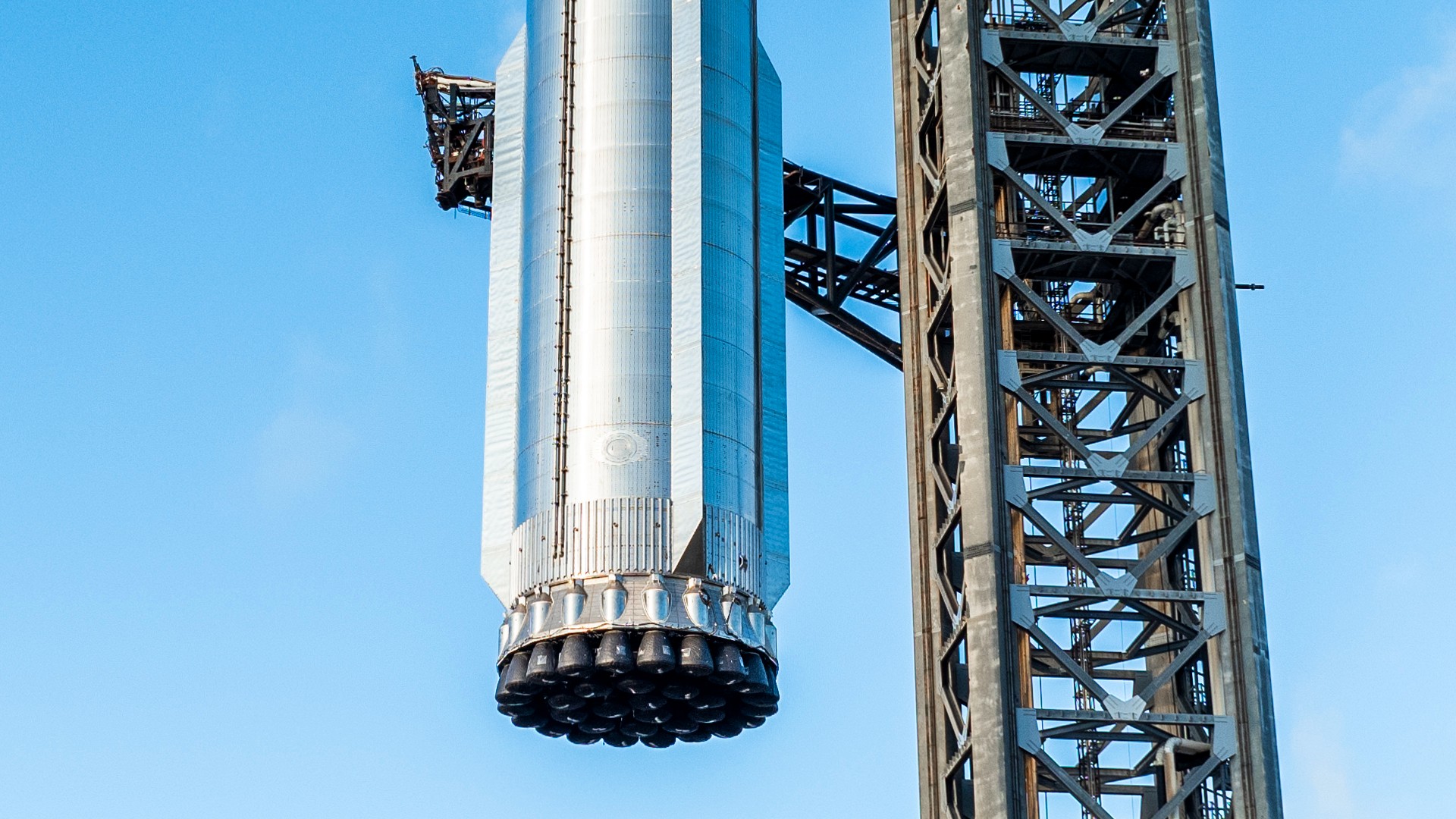
SpaceX called off the 13th test flight of its Starship rocket on Thursday after four of the 33 Raptor 3 engines on the Super Heavy booster failed to ignite during the startup sequence. The countdown reached zero, but the launch computers triggered an automatic abort.
The launch attempt from SpaceX's Starbase facility in South Texas was originally scheduled for 5:45 pm local time. The countdown proceeded smoothly through propellant loading of more than 11.5 million pounds of liquid methane and liquid oxygen, but the engines did not cooperate.
What You Need to Know
- SpaceX scrubbed Starship Flight 13 at T-0 because four Raptor 3 engines failed to start
- Elon Musk confirmed two engines will be replaced, with the next attempt likely early next week
- Flight 13 was meant to test fixes for engine issues that plagued Flight 12 in May
- Starship V3 and Raptor 3 engines were debuting on only their second flight
What Happened
The Super Heavy booster's 33 Raptor 3 engines are ignited in a precise sequence before liftoff. During Thursday's attempt, the launch computers detected that four engines never ignited, triggering the automatic abort. SpaceX began draining propellant immediately, and ground teams started inspecting the engines.
Elon Musk posted on X that most probable launch timing is early next week after two of the Raptor engines are replaced. This is the second Starship V3 flight after the Raptor 3 engine design debuted on a mostly successful test flight in May.
Flight 12 Lessons
The May test flight, known as Flight 12, experienced several engine issues that SpaceX hoped to address on this mission. During stage separation, slight differences in engine startup on the upper stage caused the booster's directional flip to be off by approximately 90 degrees. SpaceX modified the startup sequence to be more robust to timing variability.
Some of the booster's 33 engines also failed to reignite during the landing burn in May, preventing a controlled splashdown in the Gulf of Mexico. One of the six Raptor engines on Starship's upper stage shut down prematurely, forcing SpaceX to skip an attempt to reignite an engine in space.
What Flight 13 Was Meant to Prove
SpaceX planned to demonstrate several corrective actions on this flight: a more reliable engine startup sequence, successful booster landing burn, and in-space Raptor reignition. A successful flight would have helped clear the way for Starship to move to an orbital flight, enabling Starlink satellite launches and orbital refueling tests critical for NASA's Artemis lunar lander program.
Bottom Line
The Starship Flight 13 scrub shows that engine reliability remains the biggest challenge for the world's most powerful rocket. With two engines being replaced and another attempt expected next week, SpaceX is taking a methodical approach to debugging the Raptor 3 before pushing toward orbital operations.