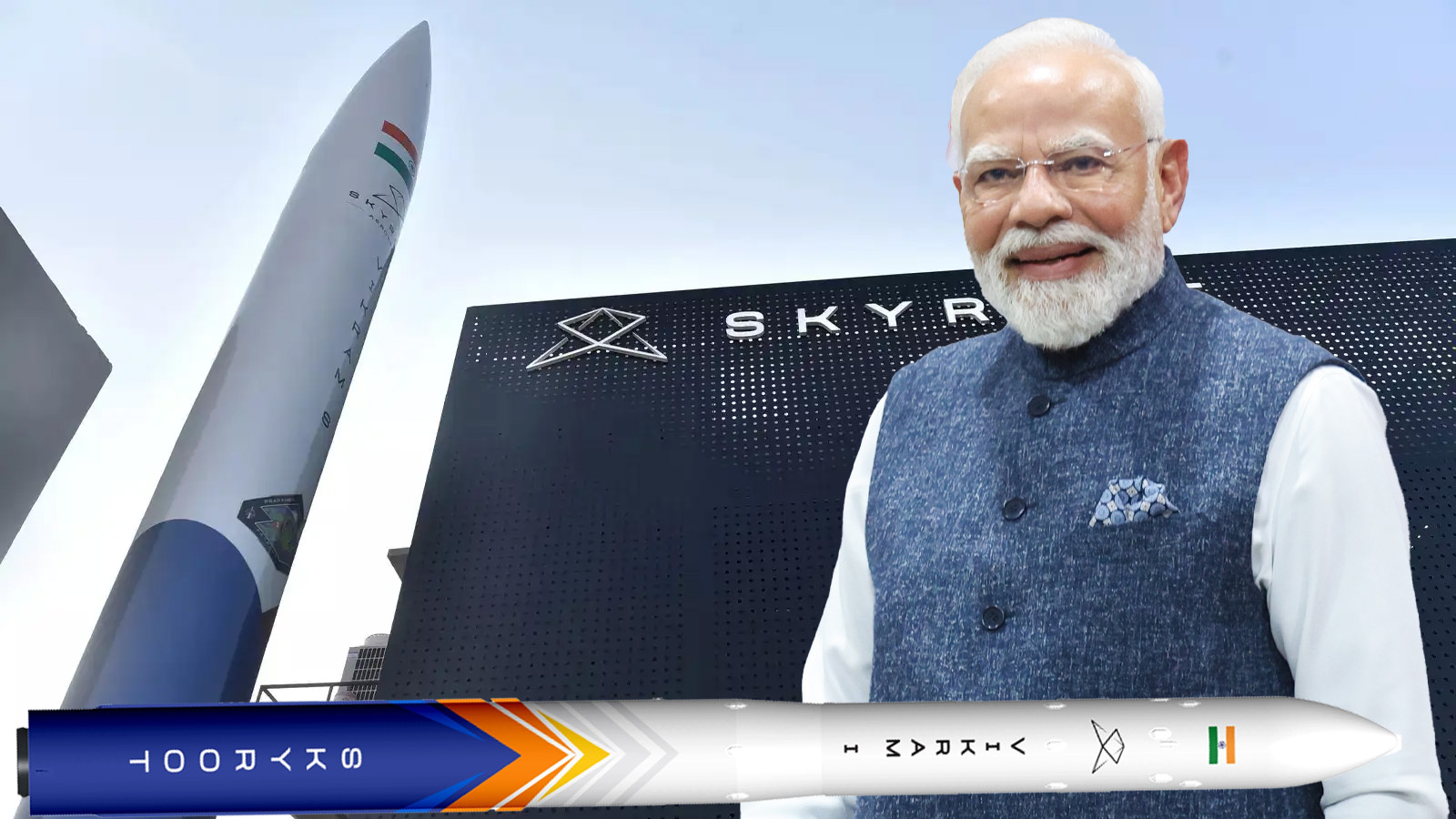
India's private space sector is set to reach a historic milestone on Saturday. Skyroot Aerospace will attempt the first orbital launch of its indigenously developed rocket, Vikram-1, from the Satish Dhawan Space Centre at Sriharikota at 11:30 am.
The mission, named Aagaman, meaning arrival, will be the first time a private Indian company attempts to place a payload into orbit using a completely privately developed launch vehicle.
What You Need to Know
- Vikram-1 is India's first privately developed orbital-class rocket, standing seven storeys tall
- It can carry small satellites weighing up to 350 kg to Low Earth Orbit
- The maiden flight targets a 450 km orbit at 60 degrees inclination
- Launch is scheduled for July 18 at 11:30 am from Sriharikota
The Rocket
Vikram-1 is a multi-stage orbital launch vehicle constructed with an all-carbon composite structure. Its propulsion systems, including 3D-printed engines and high-thrust solid rocket boosters, have been developed entirely in-house by Skyroot Aerospace. The rocket stands approximately seven storeys tall and is designed to deliver small satellites weighing up to 350 kg to Low Earth Orbit.
All stages of Vikram-1 have been successfully integrated and stacked on the launch pad at Sriharikota's first launch pad. The company has completed final integrated vehicle checks, interface verification with telemetry ground stations, and tracking radar system checks.
Payloads on Board
Vikram-1 will carry technology demonstration payloads from Grahaa Space, Cosmoserve, and DCubed, along with Skyroot's own SCOPE payload. The mission will also carry Cosmic Bloom, an artwork by Cosmos Diamonds, and a micro-art payload.
What This Means for India
Skyroot Aerospace previously made history in November 2022 with the Vikram-S suborbital mission, which became the first private rocket to reach space from India. Mission Aagaman takes the next giant leap by attempting orbit.
Pawan Kumar Chandana, co-founder and CEO of Skyroot Aerospace, said that all possible ground testing has been completed. On July 18, the company will see how Vikram-1 performs in a real flight environment for the first time. The data collected will be used to improve future versions and support the company's plans for regular launch operations.
The mission represents the work of roughly 1,000 people, over 400 suppliers, and nearly 3,000 days of effort. Naga Bharath Daka, co-founder and COO, described it as the first step toward creating a reliable, on-demand launch company for the world from India.
Bottom Line
Mission Aagaman is a defining moment for India's private space ecosystem. If successful, Skyroot's Vikram-1 will place India among a handful of nations with private orbital launch capability, opening the door to commercial satellite launches from Indian soil.