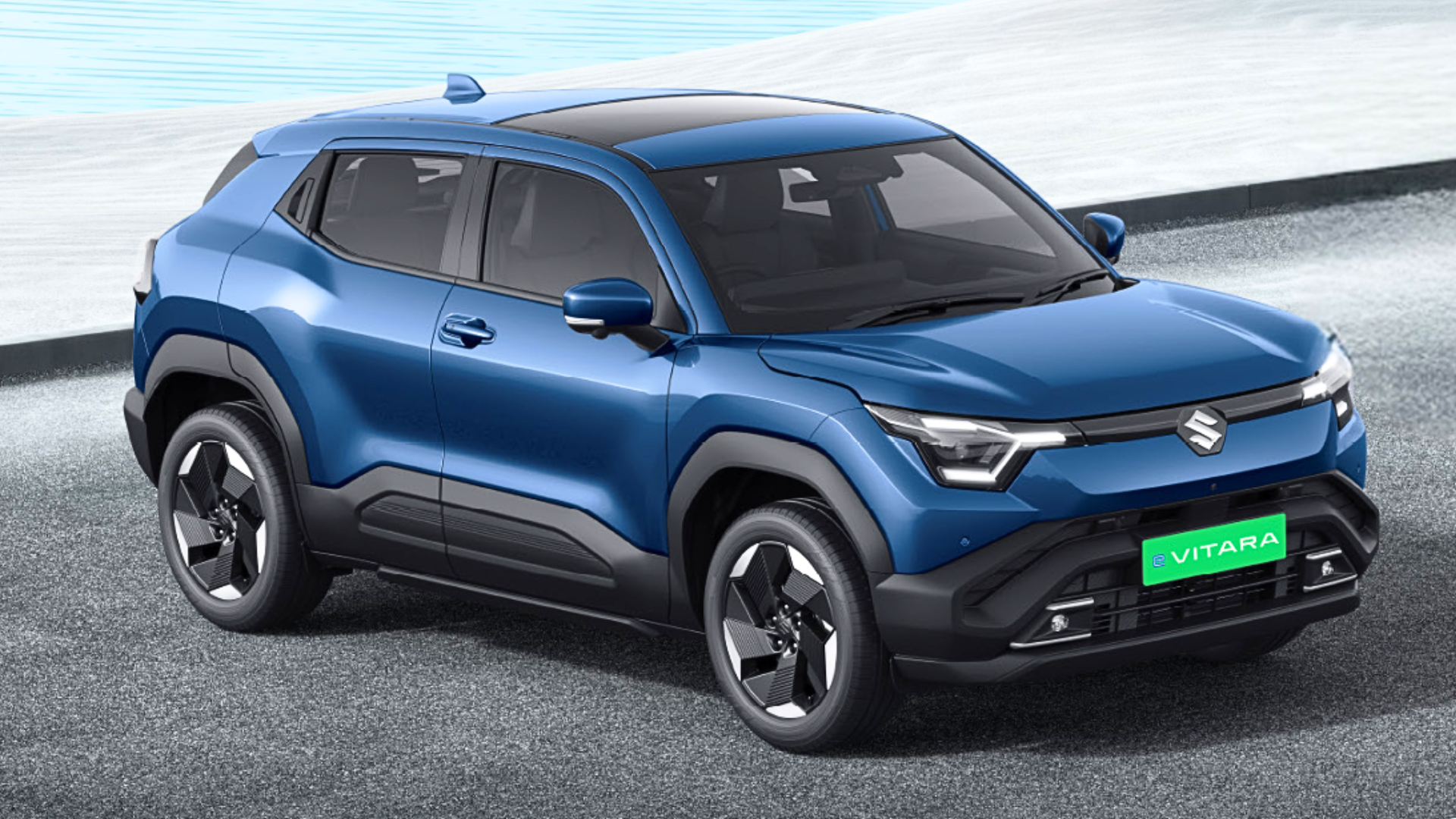
Maruti Suzuki has officially entered the electric vehicle segment in India with the launch of the eVitara, a mid-size electric SUV that marks a turning point for the country's largest carmaker. The eVitara is available in four variants Delta, Zeta, Alpha, and Alpha Dual Tone with prices starting at Rs 17.99 lakh (ex-showroom) for the standard purchase option and Rs 10.99 lakh under the Battery-as-a-Service model.
What You Need to Know
- Maruti Suzuki eVitara launches as the company's first electric car in India
- Available with 49 kWh and 61 kWh battery packs, delivering up to 543 km range
- Priced from Rs 17.99 lakh (ex-showroom) or Rs 10.99 lakh with BaaS subscription
- Offered in Delta, Zeta, Alpha, and Alpha Dual Tone variants
- Over 10,000 units already exported before domestic launch
Battery and Range
The eVitara comes in two single-motor front-wheel-drive configurations. The entry-level variants use a 49 kWh LFP battery pack producing 105.8 kW and 193 Nm of torque, delivering a claimed range of 440 km. The higher variants get a 61 kWh pack with 128 kW power output and a range of up to 543 km.
Charging the 49 kWh battery from 10 to 100 percent on a 7.4 kW AC charger takes about six and a half hours. A DC fast charger can top up from 10 to 80 percent in approximately 45 minutes. Every eVitara owner receives a complimentary 7.4 kW AC wall box charger with installation.
Pricing and Variants
The standard ex-showroom pricing starts at Rs 15.99 lakh for the Delta variant, going up to Rs 20.01 lakh for the Alpha Dual Tone. Under the BaaS model, the upfront vehicle price drops significantly to Rs 10.99 lakh for the Delta grade, with a battery subscription fee of Rs 3.99 per kilometre. The higher variants under BaaS command a subscription fee of Rs 4.39 per kilometre.
Features and Safety
Maruti has equipped the eVitara generously even in the base Delta grade. Standard features include LED projector headlamps, 18-inch alloy wheels, a 10.25-inch digital instrument cluster, a 10.25-inch touchscreen infotainment system with connected car functions, automatic climate control, and rear AC vents.
Safety kit includes seven airbags, front and rear parking sensors, a tyre pressure monitoring system, Electronic Stability Programme, Hill Hold Control, and an auto-dimming rearview mirror. The eVitara has been built on a dedicated BEV platform designed specifically for electric powertrains.
EV Ecosystem and Availability
Maruti Suzuki has been building its EV ecosystem alongside the vehicle launch. The company has over 1,500 EV-ready service centres, specially trained NEXA EV relationship managers, and dedicated charging managers. It is also working with charging point operators to build a network of over 1 lakh charging points across India by 2030.
Deliveries have commenced but availability will remain limited initially due to production constraints. Maruti has already exported over 10,000 units of the eVitara to various global markets before the India launch.
How It Compares
The eVitara competes directly with the Hyundai Creta Electric, which starts at Rs 18.02 lakh, and the Tata Curvv EV. Maruti's pricing undercuts its closest rival by roughly Rs 1 lakh, a significant advantage in the price-sensitive Indian market. The company aims to claim 15 percent of its total sales from electric vehicles by 2030.
Bottom Line
The Maruti Suzuki eVitara is a landmark launch that brings the country's largest automaker into the EV race. With competitive pricing, strong range figures, and Maruti's extensive sales and service network, it has the potential to accelerate EV adoption in India significantly.