
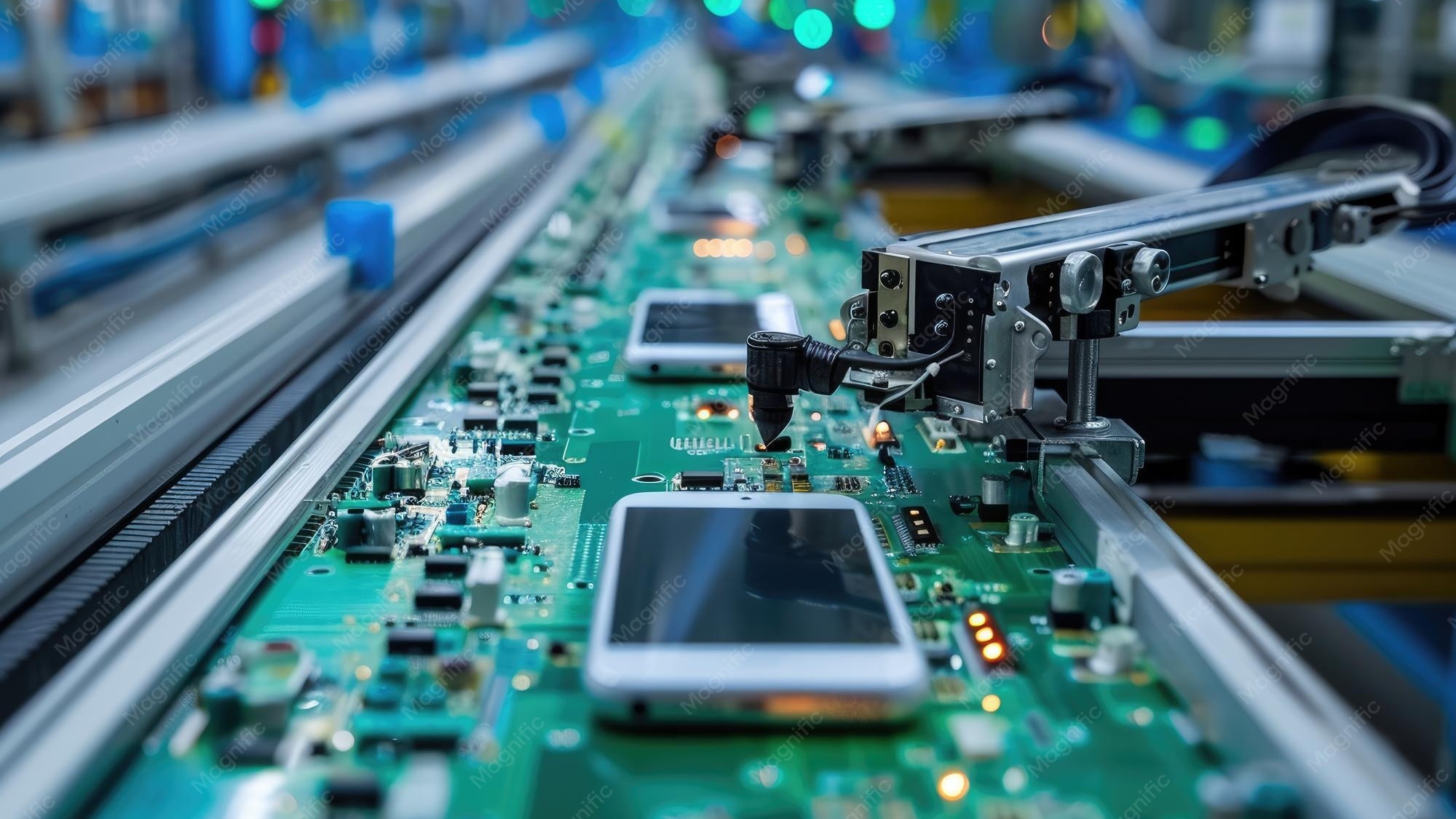
The Indian government has removed import duties on select electronics components used in smartphones, laptops, and tablets, a move that could lower prices for buyers while strengthening the country's push to become a global manufacturing hub. The decision covers components that domestic manufacturers currently import in large volumes, including display assemblies, camera modules, printed circuit board assemblies, and mechanical parts.
For consumers who have watched gadget prices climb over the past few years, this signals potential relief.
What You Need to Know
- Import duties removed on key components including displays, camera modules, and PCB assemblies
- Policy aims to lower production costs for companies manufacturing in India under the Make in India initiative
- Consumers could see price reductions on smartphones, laptops, and tablets within two to three months
- Move strengthens India's position as an alternative manufacturing hub to China under the PLI scheme
What Changed and Why
The latest duty rationalization removes tariffs on components that account for a large share of the bill of materials in a typical smartphone or laptop. Display panels, camera sensors, mechanical parts, and certain PCBs are now exempt when used in electronics manufacturing.
This follows similar duty reductions on mobile phone components over the past three years. The government has been gradually lowering tariffs on components while keeping higher duties on finished devices, creating an incentive for companies to assemble locally rather than import fully built products.
The Production Linked Incentive scheme has been central to this approach. The PLI scheme has attracted investments from Apple, Samsung, Xiaomi, and Dixon Technologies, helping India's electronics manufacturing sector grow from roughly USD 40 billion in 2019 to over USD 100 billion. But domestic value addition has remained low, with most manufacturers still importing critical components.
How This Affects Smartphone Prices
Smartphone buyers will see the most immediate impact. India is the world's second-largest smartphone market, and most devices sold here are assembled locally by Samsung, Apple (through Foxconn and Wistron), Xiaomi, Oppo, and Vivo.
Import duties on components add 5 to 15 percent to production costs. When those duties are removed, manufacturers can pass the savings to consumers or keep them as margin. In a price sensitive market like India, competitive pressure usually forces the former.
Industry analysts expect price reductions of 3 to 7 percent on mid-range and budget smartphones. For a Rs 25,000 phone, that means saving Rs 750 to Rs 1,750. Premium devices like the iPhone could see smaller percentage cuts, but even 3 percent off a Rs 1,00,000 phone saves Rs 3,000.
Components imported under the new regime will take two to three months to flow through supply chains. Consumers should see price adjustments by the October festive season.
What About Laptops and Tablets
The duty removal also covers components common to laptops and tablets, including display panels, cooling modules, and mechanical parts. This is most relevant for budget and mid-range laptops priced between Rs 30,000 and Rs 70,000, where production cost reductions could narrow the price gap with imported models.
For tablets, the impact depends on how much of the savings manufacturers pass on. Samsung and Lenovo, both of which make tablets in India, could use the relief to price more aggressively.
The Make in India Angle
This move addresses the biggest weakness in India's electronics manufacturing story: low domestic value addition. While India has become a major assembly hub, most high-value components are still imported from China, South Korea, and Taiwan.
By removing import duties on components, the government makes India more cost competitive against Vietnam, Thailand, and Mexico for factory investments. For Apple, which now assembles roughly 20 percent of its iPhones in India, the duty removal improves local economics and makes it more viable to move additional production from China.
Samsung operates its largest mobile phone factory in Noida and exports a significant portion of its Indian-made phones to Africa and the Middle East. Duty-free components improve export profitability. Xiaomi, which manufactures most of its India-bound phones locally, could use the savings to regain price competitiveness.
What This Means for the Industry
India still imports over 60 percent of the components used in domestic electronics production. The duty removal signals a shift from a protectionist model, where high tariffs on finished goods encouraged assembly, to an export-friendly model, where duty-free components support globally competitive manufacturing.
Electronics is now India's third-largest export category. The PLI scheme has exceeded its initial targets and been expanded to cover IT hardware and networking equipment. The next phase depends on moving from assembly to component manufacturing, including semiconductor fabrication and display production.
Bottom Line
The removal of import duties on electronics components is good news for Indian consumers and manufacturers. Smartphone and laptop buyers can expect modest price reductions starting in the coming months, while companies like Apple, Samsung, and Xiaomi get a more favorable cost structure for their India operations. The bigger picture is that India is doubling down on its manufacturing ambition, bringing it closer to becoming a genuine alternative to China in global electronics supply chains.