
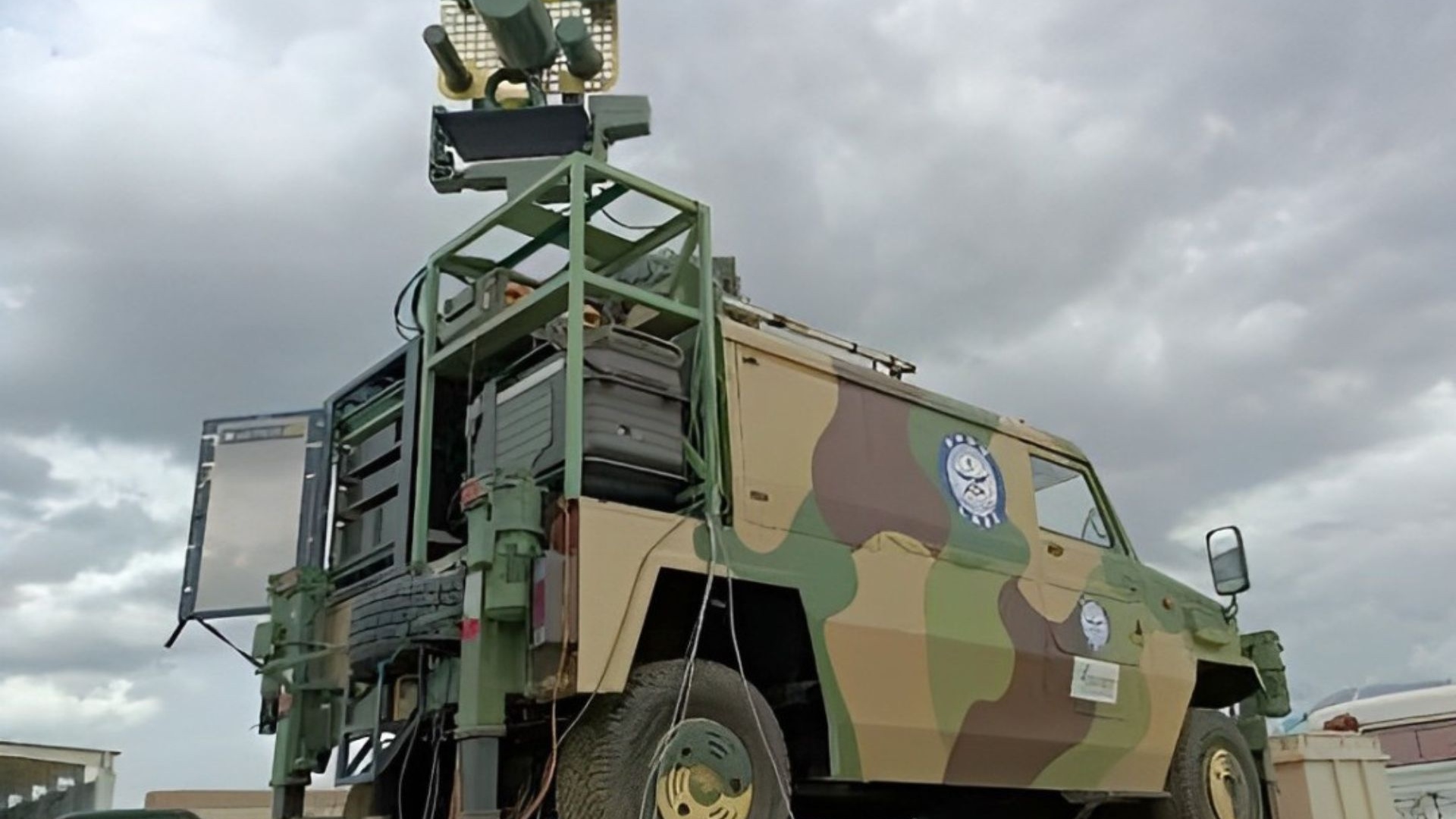
Armory, a Gurugram-based defence-technology startup founded in 2024, has secured three contracts from the Ministry of Defence totalling Rs 100 crore for its indigenous AI-powered counter-drone system called SURGE. The order, awarded after field evaluations across multiple terrains, makes Armory one of the youngest venture-backed companies in India to land a sovereign military contract of this scale.
What You Need to Know
- Armory won Rs 100 crore in contracts from the Ministry of Defence for its SURGE Counter-Unmanned Aircraft System.
- SURGE uses proprietary Samaritan OS to detect, track, and neutralize rogue drones through AI-driven radio frequency analysis.
- The system went from concept to field-ready deployment in 14 months, an unusually fast timeline for defence hardware.
- Armory has raised Rs 35 crore in equity funding and is planning another round in 2026.
The SURGE System
SURGE is a soft-kill counter-drone platform that detects hostile unmanned aircraft using radio frequency scanning. The system runs on Armory proprietary Samaritan OS, which scans the electromagnetic environment millions of times per second, identifies irregular RF signatures, and updates its threat library in real time. Once a threat is confirmed, SURGE can jam or spoof the drone navigation signals, severing its connection to the operator without physical destruction.
This approach matters because modern drones can be modified to communicate on non-standard frequencies that traditional fixed-frequency jammers cannot block. SURGE adaptive AI allows it to handle these variable threats on the fly. The system has a detection range of up to 5 kilometres and a neutralization range of around 3 kilometres.
Built at Software Speed
Armory founder and CEO Amardeep Singh, an IIT-Bombay alumnus, built the company around the principle of building defence hardware at the speed of software. The SURGE system went from a paper prototype to field trials with Army regiments in roughly 14 months. Each deployment was shaped by direct feedback from the units that would use it, rather than extended lab-based development cycles.
The speed of execution was a key factor in the MoD decision. The contract reflects a broader shift in Indian defence procurement toward outcome-driven evaluation, where deployment readiness and technical capability carry equal weight.
Funding and Expansion
Armory has raised approximately Rs 35 crore in equity funding from investors including growX ventures, Antler, Industrial47, Dexter Ventures, AC Ventures, 8x, and Galiakotwala Engineering. The company operates an R&D centre in Manesar with a team of about 18 engineers and AI specialists.
With the MoD contract in hand, Armory plans to scale its manufacturing capacity, expand its team, and accelerate development of additional indigenous defence technologies. The company is also working on hard-kill solutions that would enable physical takedown of hostile drones, expanding beyond its current soft-kill approach. A further funding round is expected later in 2026.
Why This Matters
Armory contract win signals a structural change in India defence ecosystem. The MoD allocated Rs 7.85 trillion for defence in the FY26 budget, with an emphasis on domestic innovation and reduced reliance on imports. Frameworks like iDEX and the accelerated EP-6 procurement route have made it possible for early-stage startups to compete for contracts that were historically reserved for large public sector undertakings and established aerospace firms.
Armory success also validates a model where small, agile teams using AI and software-defined hardware can deliver mission-critical defence capabilities faster than traditional contractors. As drone threats along India borders continue to evolve, the ability to rapidly deploy adaptive counter-measures has become a strategic necessity.
Bottom Line
Armory Rs 100 crore MoD contract is a landmark for Indian defence-tech startups. It proves that young companies can win large sovereign contracts by combining AI-driven innovation with rapid, user-informed development cycles. The company trajectory will be closely watched as an indicator of how deep the defence sector opening to startups will go.