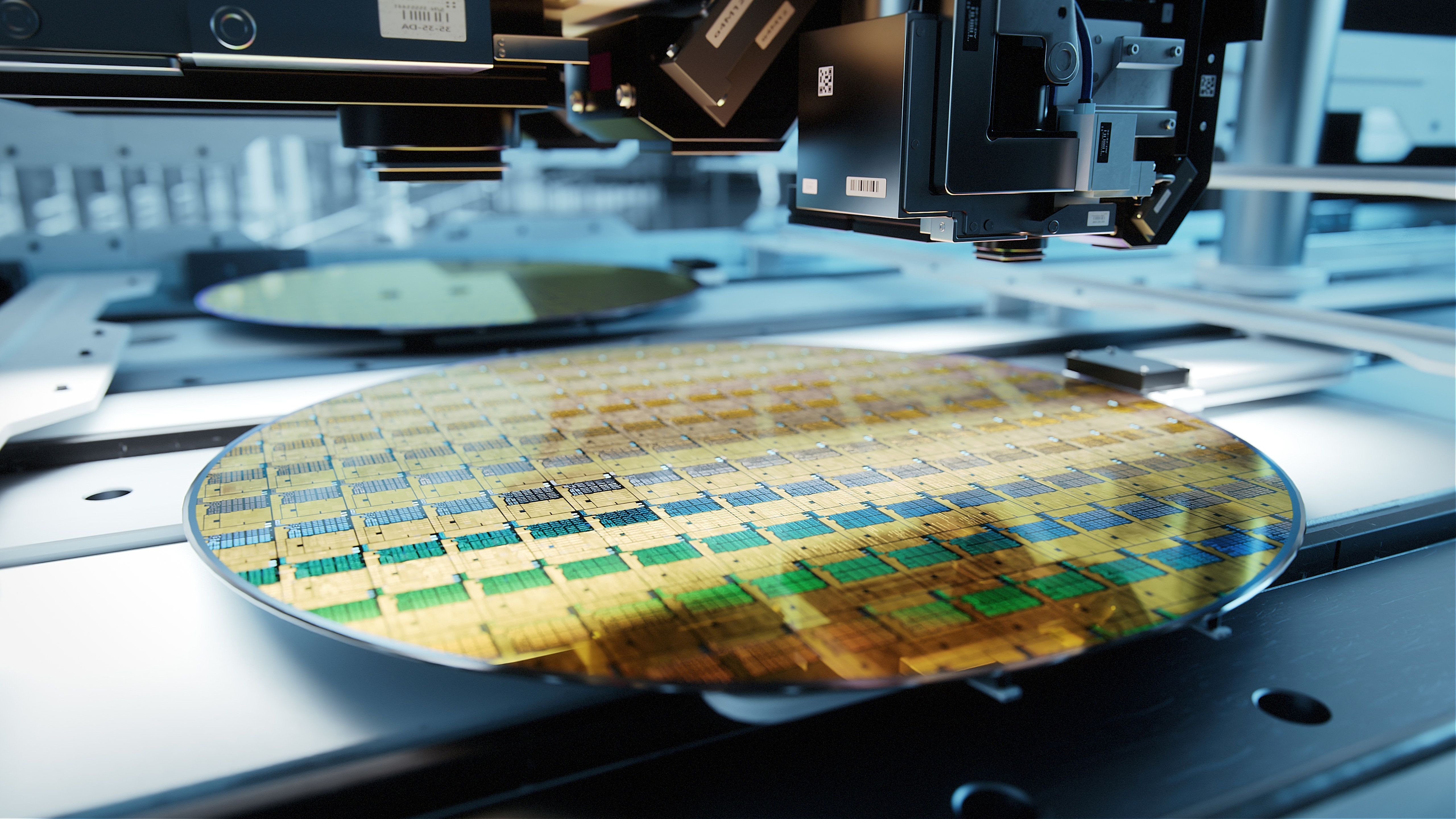
Anthropic, the developer of the AI model Claude, is in early-stage discussions with Samsung Electronics about manufacturing a custom AI chip using Samsung's foundry division's 2-nanometer process and advanced packaging facilities. The talks, first reported by The Information on July 2, 2026, signal Anthropic's growing interest in reducing its dependence on Nvidia for AI training and inference hardware.
The project remains at an early stage. Anthropic has not yet decided what the chip would be used for, how powerful it would be, or how it would fit into a server architecture. The company could still abandon the effort entirely.
What You Need to Know
- Anthropic is in discussions with Samsung to manufacture custom AI chips on a 2nm process
- The project is early-stage with no finalised design or commitment
- Anthropic hired Clive Chan, who previously helped build OpenAI's custom chip programme
- Samsung's Taylor fab in Texas is preparing for 2nm mass production starting next year
- The talks follow OpenAI's own custom chip announcement with Broadcom
Why Anthropic Is Building Custom Chips
Anthropic's annualised revenue run rate surpassed $30 billion earlier this year, more than tripling from roughly $9 billion at the end of 2025. That growth rate makes the economics of custom silicon increasingly attractive. Designing its own chips would give Anthropic additional control over the hardware that runs its Claude models, reducing reliance on Nvidia's GPU supply chain, which has been constrained and expensive for AI companies.
In April 2026, Reuters reported that Anthropic was exploring building its own chips as Claude's compute demands outpaced available supply. At the time, the effort was described as preliminary, with no dedicated team assembled. Since then, Anthropic has hired Clive Chan, who previously helped build OpenAI's custom chip programme, signalling a move from exploration to active development.
The company also signed a long-term deal with Google and Broadcom in April for roughly 3.5 gigawatts of TPU compute starting in 2027. Custom chip development would add another layer of hardware independence on top of that cloud compute agreement.
The Samsung Partnership
Samsung has been positioning its foundry division as a leading alternative to TSMC, which currently dominates the AI chip manufacturing market. With major tech companies racing to develop their own specialised AI chips, TSMC alone cannot absorb all production demand. Samsung, with its advanced 2nm manufacturing capabilities, is emerging as a key alternative.
The Taylor fab in Texas, built on Samsung's Austin campus, is currently in a trial-operation phase, with full-scale 2nm mass production scheduled to begin next year. The 2nm process delivers higher chip density, superior data processing speeds, and better power efficiency compared to current 3nm and 4nm nodes.
The partnership discussions began taking shape in May 2026, when Samsung was introduced alongside SK hynix and Micron as a strategic infrastructure partner during Anthropic's Series H fundraising round. Industry observers interpreted Anthropic's mention of a logic chip partner as an implicit reference to Samsung's foundry division.
Samsung already plays a significant role in the AI chip supply chain as a major manufacturing partner for Nvidia. The two companies are also building an AI chip factory together in South Korea.
Industry Context
The talks come about a week after OpenAI announced its own custom AI chip in a partnership with Broadcom, underscoring the broader industry trend toward vertical integration in AI hardware. Major AI companies are increasingly designing their own silicon rather than relying solely on off-the-shelf GPUs from Nvidia.
When asked for comment, Anthropic told TechCrunch that a diversified hardware stack including chips from Google, Amazon, and Nvidia will continue to be central to its compute strategy. The company said it had nothing further to add on the Samsung discussions.
What It Means for Samsung
A deal with Anthropic would be a significant win for Samsung's foundry business, which has been working to win orders from major AI companies. The string of potential wins is expected to heighten expectations for the foundry division's return to profitability. Samsung's foundry strategy centres on phasing out older processes and concentrating its technological edge on leading-edge 2nm to 4nm nodes.
Bottom Line
Anthropic's custom chip discussions with Samsung reflect the broader shift in the AI industry away from total reliance on Nvidia. Whether or not this particular partnership materialises, the direction of travel is clear: AI companies want more control over the hardware that powers their models, and Samsung wants to be the manufacturer that builds it.