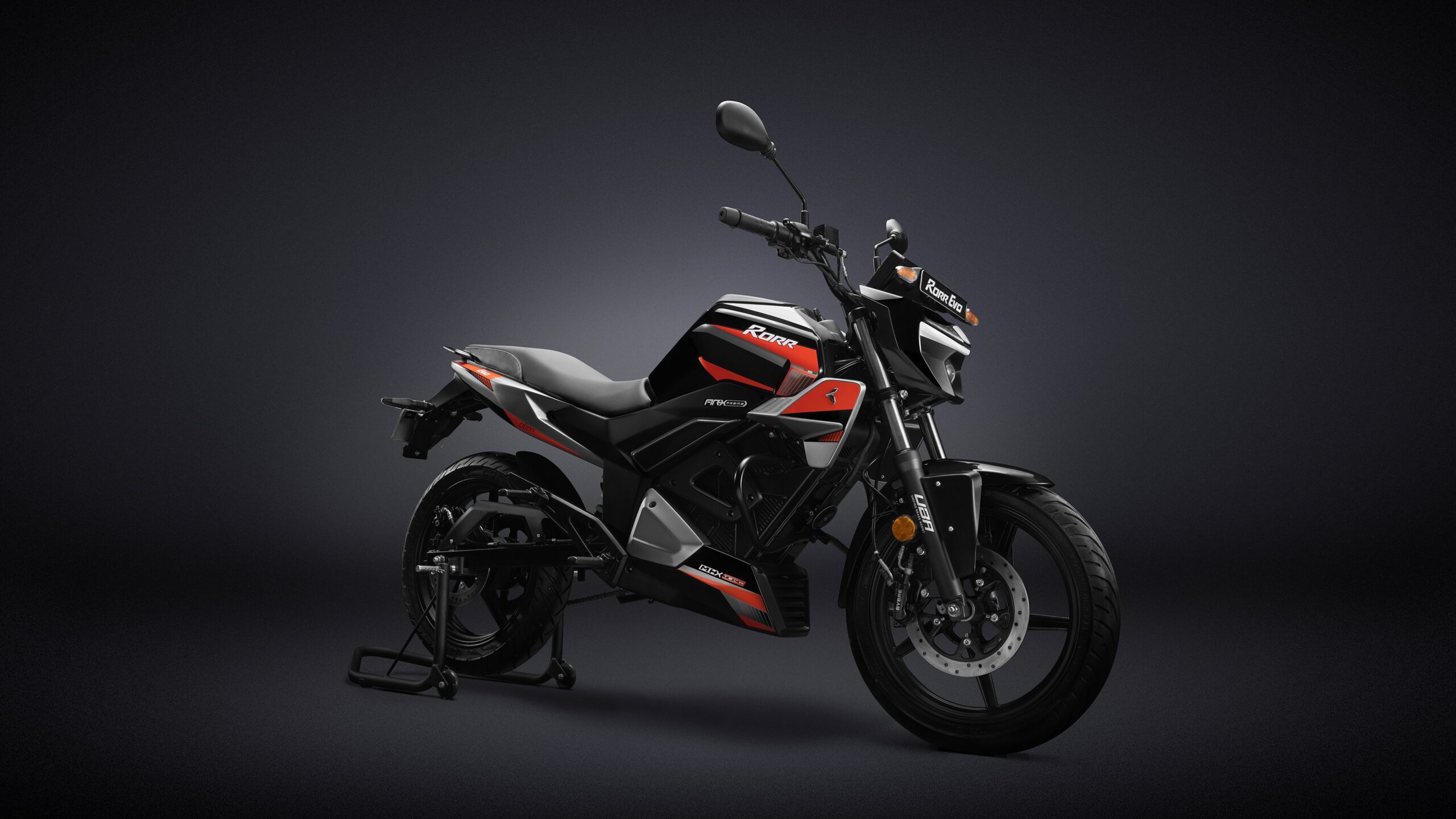
Oben Electric has commenced customer deliveries of the Rorr Evo electric motorcycle, starting with customers in Bengaluru. The model received more than 25,000 bookings within 15 days of its launch in May 2026, making it one of the most anticipated electric two-wheelers in India this year.
The company plans to expand deliveries across its network of 150 showrooms spanning more than 90 cities in the coming weeks. Oben Electric manufactures key components in-house, including battery packs, motors, vehicle control units, chargers, and software, at a facility with an annual capacity of over one lakh units. The Bengaluru-based startup was founded in 2020 by Madhumita Agrawal and previously launched the original Rorr in 2023 before introducing the Evo variant with significant upgrades.
The strong booking response positions the Rorr Evo as a serious contender in India's nascent electric motorcycle segment, which has so far struggled to replicate the success of electric scooters.
What You Need to Know
- Oben Rorr Evo priced at Rs 1,24,999 (ex-showroom)
- Deliveries begin in Bengaluru, expanding to 150 showrooms across 90-plus cities
- 9 kW motor, 3.4 kWh LFP battery with IDC-certified range of 180 km
- 0-40 km/h in 3 seconds, top speed of 100 km/h
- 5-inch TFT display, OTA updates, geo-fencing, fall detection with Emergency SOS
Battery and Range
The Rorr Evo is powered by a 3.4 kWh lithium iron phosphate battery pack, the same chemistry increasingly favoured by EV manufacturers for its thermal stability and longer cycle life. Oben claims an IDC-certified range of 180 km on a full charge.
The battery comes with an 8-year warranty, signalling confidence in the LFP cells longevity. The company designs and assembles the battery packs in-house at its Bengaluru facility. LFP batteries are known for handling more charge cycles before degradation compared to traditional lithium-ion cells, which is a key advantage for daily commuters who will put significant mileage on the motorcycle over its lifetime.
In real-world conditions, riders can expect slightly lower range depending on riding style, terrain, and load. The IDC certification provides a standardised benchmark that allows comparison with other electric two-wheelers in the market.
Motor and Performance
A 9 kW electric motor drives the rear wheel, producing peak torque of 72 Nm. The Rorr Evo accelerates from 0 to 40 km/h in three seconds, which makes it competitive in urban stop-and-go traffic. The top speed is electronically limited to 100 km/h.
The motor is also built in-house, along with the vehicle control unit that manages power delivery, regenerative braking, and ride modes. The regenerative braking system recovers energy during deceleration and feeds it back to the battery, extending effective range in city riding conditions.
Oben has tuned the motor for low-end torque delivery, which gives the Rorr Evo responsive acceleration from a standstill. The single-speed gearbox means there is no clutch or gear shifting, making it accessible for riders transitioning from scooters or first-time motorcycle owners.
Features and Technology
The Rorr Evo runs on Oben's ARGUS connected technology platform. It offers a 5-inch TFT display with turn-by-turn navigation, OTA software updates, geo-fencing, remote immobilisation, and fall detection with automatic Emergency SOS alerts. These features are typically found on higher-end electric motorcycles and help the Rorr Evo stand out in its segment.
Charging
Oben claims the battery can be charged from 0 to 80 percent in approximately 2.5 hours using a standard 15A socket. A full charge takes around 3.5 hours. The company also offers a portable charger with the motorcycle, which plugs into any household outlet, eliminating the need for dedicated charging infrastructure at home.
For apartment dwellers and riders without garage access, the portable charger is a practical solution. Oben is also working on a fast-charging network, though details on rollout timelines remain limited.
Market Positioning
At Rs 1,24,999, the Rorr Evo sits in a segment where electric motorcycles are still finding their footing. Most EV sales in India remain concentrated in scooters, but the Rorr Evo's strong booking numbers suggest growing appetite for electric motorcycles among mainstream buyers. With 25,000 bookings in 15 days, the challenge for Oben will be scaling deliveries without stretching wait times beyond three to four months.
The Competition
The Rorr Evo competes with the Tork Kratos R, Revolt RV400, and the upcoming Bajaj electric motorcycle. Its in-house manufacturing approach gives Oben greater control over cost and supply chain, which could translate into more consistent availability as volumes ramp up.
The Tork Kratos R offers a similar price point with a 9 kW motor and 4.5 kWh battery, while the Revolt RV400 comes with battery-swapping capability but at a higher price. Bajaj has yet to launch its electric motorcycle, leaving early movers like Oben and Tork to capture the initial wave of demand.
Oben's 25,000 bookings in 15 days suggest strong product-market fit, but the company must now demonstrate it can manufacture, deliver, and service the Rorr Evo at scale without compromising quality.
Bottom Line
The Oben Rorr Evo delivers a well-rounded package of performance, range, and connected features at a competitive price. The real test will be execution at scale, but the initial response suggests buyers are ready for electric motorcycles that don't compromise on features or range.