Artificial intelligence is no longer a futuristic concept in military strategy. It is being deployed on battlefields today, from the drone war in Ukraine to precision strikes in West Asia and India's own Operation Sindoor. As AI reshapes how wars are fought, India is racing to build its own military AI capabilities while navigating complex questions about autonomy, ethics, and sovereignty.
What You Need to Know
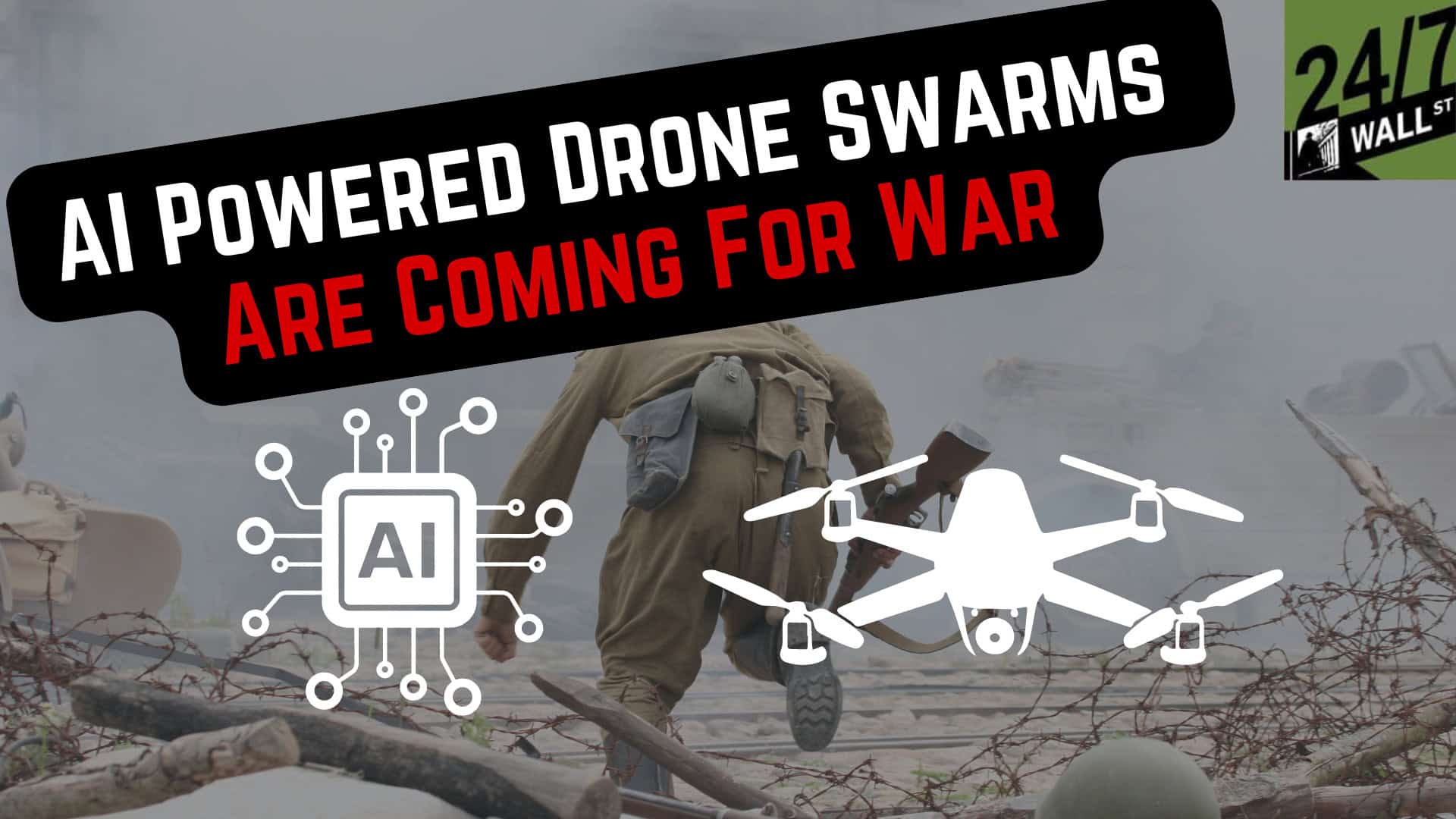
- India's tri-services AI policy endorses lethal autonomous weapon systems, drone swarms, and AI-driven cyber warfare
- The Defence Acquisition Council approved Rs 52,000 crore in procurements focused on AI-enabled drones, counter-drone systems, and electronic warfare
- India is setting up a Rs 300 crore Centre of Excellence with Sarvam AI for indigenous military AI development
- Operation Sindoor demonstrated India's use of AI for real-time sensor data processing and precision targeting
- Global military AI spending is accelerating, with the Pentagon making Palantir's Maven system a core command-and-control platform
India's New Military AI Policy
In March 2026, India's armed forces formally endorsed a new tri-services AI policy drawn up by Headquarters Integrated Defence Staff. The policy identifies lethal autonomous weapon systems, drone swarms, AI-driven cyber attacks, and predictive battlefield analytics as core capabilities for future warfare.
The policy marks a significant shift. It explicitly endorses autonomous systems that can replace human soldiers in high-risk environments, including active border patrols. It also mandates the creation of a dedicated defence cloud and calls for deep industry and academic collaboration to maintain a technological edge.
Crucially, the policy emphasizes meaningful human oversight. India is not pursuing fully autonomous killing machines. Instead, the goal is decision superiority with human judgment retained at critical points.
How AI Is Changing Battlefields
The Russia-Ukraine war has been a live laboratory for military AI. Both sides use AI for intelligence gathering, drone targeting, and data analysis. Ukraine has deployed AI-enabled drone swarms against Russian armor, while Russia uses electronic warfare and AI-guided munitions.
The United States has taken military AI even further. The Pentagon recently made Palantir's Maven Smart System a core command-and-control platform, integrating satellite imagery, drone feeds, radar data, and signals intelligence into a single AI-fused battlespace picture. Maven has reportedly supported thousands of US strikes.
Large language models like Anthropic's Claude are also being deployed in national security roles. Claude is used by US agencies for intelligence analysis, operational planning, and cyber operations, raising questions that are directly relevant to India's own AI strategy.
India's Preparedness: Gaps and Progress
India's FY2025-26 defence budget was Rs 6.81 lakh crore, with roughly Rs 1.80 lakh crore allocated for modernisation. While the Ministry of Defence fully utilised its capital outlay, experts argue that full utilisation is not the same as transformation.
The Indian military has already begun integrating AI into active operations. During Operation Sindoor, India used AI to process sensor data, weapons feeds, and other inputs to identify enemy positions. AI-enabled meteorological systems also contributed to long-range precision targeting by analysing 26 years of weather data.
The Defence Acquisition Council's latest approvals worth Rs 52,000 crore signal a clear shift toward network-centric warfare. The approved acquisitions focus on anti-drone electronic warfare systems, kamikaze drones with 1,000 km range, high-altitude pseudo satellites, and layered air defence systems under the Sudarshan Chakra framework.
The Sovereignty Question
One of the most critical debates in military AI is sovereignty. If India relies on foreign AI models for defence applications, it risks having its capabilities restricted during a crisis. The dispute between Anthropic and the Pentagon over Claude's use in military operations is a cautionary tale.
India is taking steps to address this. Bengaluru-based Sarvam AI is in advanced talks with the defence ministry to set up a Rs 300 crore Centre of Excellence for indigenous military AI. The centre will build AI systems trained on Indian data and operational contexts, covering the country's diverse geographical terrain and climatic conditions.
The broader goal is to build sovereign AI capabilities across the C4ISR spectrum: command, control, communications, computers, intelligence, surveillance, and reconnaissance. This includes indigenous large language models, computer vision systems for satellite imagery, and AI-powered decision support tools tailored to Indian military doctrine.
Challenges Ahead
Building military AI is not just about technology. It requires organizational change, new skills, and a cultural shift within the armed forces. Algorithmic literacy will become a combat skill. Commanders will need to understand confidence intervals, model uncertainty, and automation bias.
India also faces a funding challenge. AI-enabled warfare requires compute infrastructure, classified cloud environments, secure data lakes, and specialised personnel. These are less visible than fighter jets and tanks but equally essential.
The path forward, according to defence experts, involves three priorities: building sovereign military AI models and secure deployment environments, focusing on fusion platforms rather than isolated AI tools, and preparing for AI-enabled escalation management where conflicts move rapidly between kinetic strikes, cyber activity, drone threats, and strategic messaging.
Bottom Line
AI is fundamentally changing how wars are fought, and India is at a critical inflection point. The policy framework is in place, the budget signals are clear, and domestic AI capabilities are emerging. The question is whether India can build the institutional infrastructure, technical talent, and sovereign AI systems needed to keep pace with the global military AI race. The answer will determine the country's strategic autonomy for decades to come.